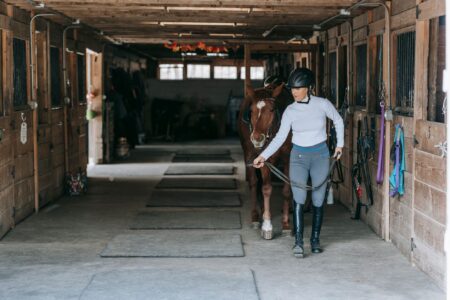


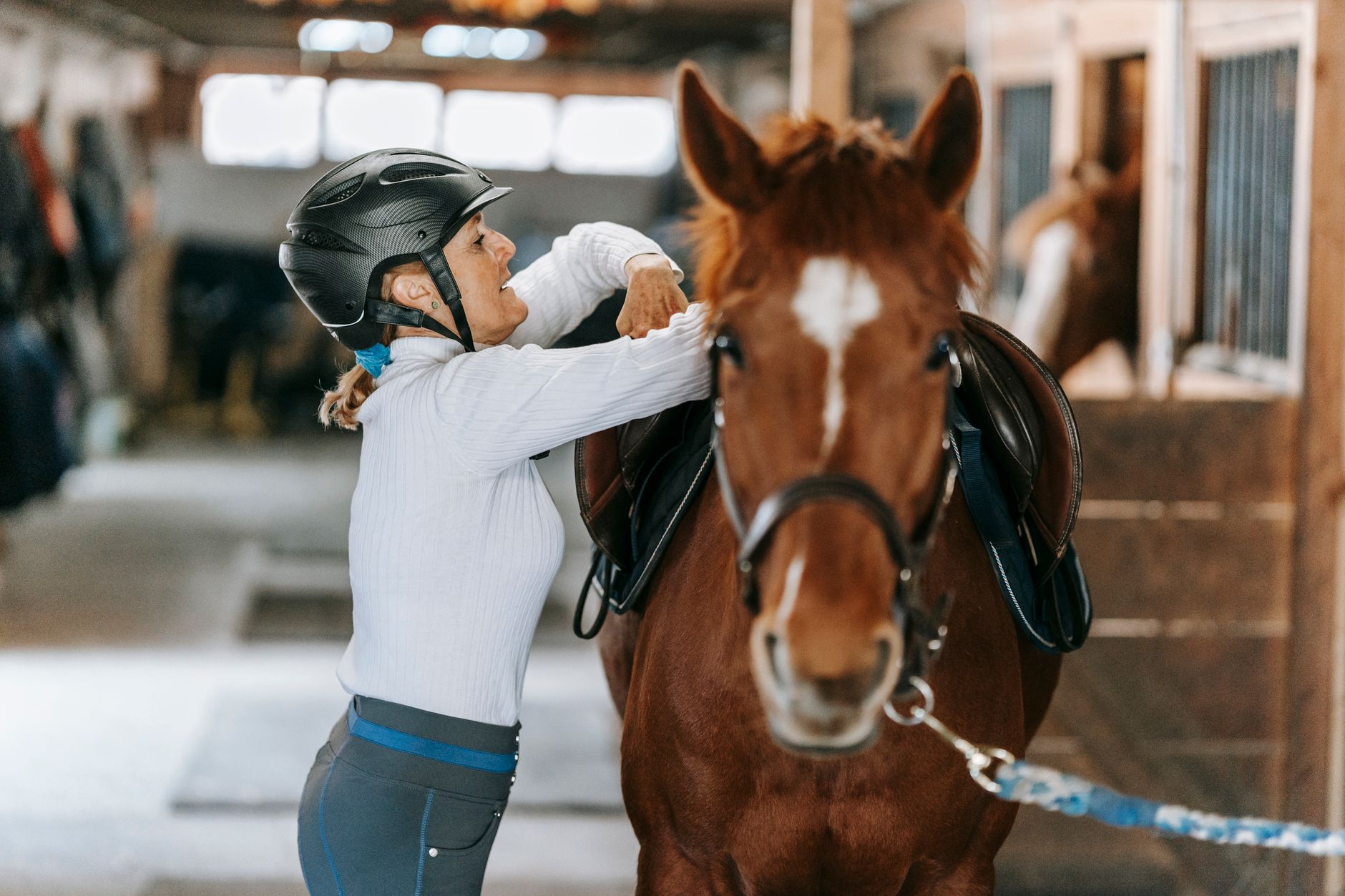
The pommel roll – that padded, curved bolster running along the front arch of an English saddle – has spent centuries helping riders stay balanced and secure in the saddle. Now it’s showing up on shoulders, and the result is anything but utilitarian.
How an Equestrian Hardware Detail Became a Silhouette Statement
Polo club aesthetics have been migrating off the field for years, but this particular borrowing feels different. Where previous equestrian crossovers leaned on surface details – the quilting, the leather trim, the brass hardware – the pommel roll translation goes structural. Designers are using its distinctive rounded, slightly overscaled curve to reshape how a shoulder drop sits and moves, pulling the garment’s silhouette into something more sculptural without adding conventional padding beneath the fabric.
The effect is immediately recognizable once you know what you’re looking at. Instead of the sharp, military-style shoulder line that dominated tailoring for years, or the dropped, deflated shoulder that defined the oversized wave after it, this treatment offers a third option: a shoulder that arcs gently outward and downward before it falls, the way a saddle’s pommel curves forward before meeting the flap. The volume is concentrated at the outermost point of the shoulder, not underneath it, which changes how the sleeve is set and how the whole upper body reads.
The construction borrows directly from saddlery technique. Saddlers use layered leather and dense foam to build the pommel’s shape so it holds under pressure and distributes weight without collapsing. Applied to tailoring, that logic translates into an internal roll structure – usually a combination of interfacing, compressed wadding, and sometimes a narrow boning channel – that keeps the shoulder arc from flattening with wear. The shoulder does not need a padded chest or a structured lining to support it. The roll carries its own geometry.
This matters stylistically because it allows for much lighter fabrication overall. Coats and jackets built around a pommel roll shoulder can use softer, drapier materials in the body – heavy crepe, brushed wool, even satin-backed fabrics – without looking deflated or unfinished at the top. The structure is localized, not distributed, and that gives designers room to play with contrast between a firm, deliberate shoulder and a fluid, relaxed fall below it.

The Silhouette in Practice: Why This Shape Works Now
Tailoring has been searching for a way out of a specific impasse: oversized boxy shapes have been so thoroughly explored that they’ve started to feel generic, but the more precise, fitted silhouettes that came before them feel too restrictive for how clothes are actually worn and layered right now. The pommel roll shoulder offers a way to have a defined, intentional silhouette without the garment needing to conform closely to the body underneath. The shape lives at the shoulder, and everything below it can breathe.
There’s also something happening with how this detail reads on the body from different angles. Straight on, the shoulder drop looks almost conventional – fuller than average, with a soft crease at the sleeve head, but not dramatically different. In profile, the pommel curve becomes visible as a deliberate forward arc, adding depth to the shoulder point in a way that a standard padded shoulder never achieves. From behind, the shoulder line has a gentle rise before it drops, which changes the whole character of the back – often the most neglected plane in tailoring.
The polo club reference also carries specific cultural weight that designers are using deliberately. Polo aesthetics signal a particular kind of inherited ease – clothes worn for function that have become, over generations, about refinement instead. The pommel roll, as a structural detail, has that same quality: it is historically purposeful, borrowed from equipment designed for performance, and it arrives in fashion with the suggestion that whoever is wearing it understands where it came from. That’s a different register than a simple equestrian print or a jodhpur-cut trouser.
Collar structure is part of the conversation too. When a garment is built around a pommel roll shoulder, the collar and lapel geometry have to be rethought – the arc of the shoulder affects how a collar lays flat or stands away from the neck. Some designers are treating this as an opportunity to develop more stand-collar or draped-neck variations that work with the shoulder’s forward pull rather than against it. The result can look like a completely new garment silhouette when in fact it’s two traditional elements – a riding-derived shoulder and a classic neckline – simply recalibrated around each other. Collar engineering in equestrian tailoring is already an established design area, and the way polo neck covers fold into relaxed collar drops shows how actively that zone is being reworked.
Styling choices around the pommel roll shoulder tend to favor restraint below the waist – the detail is doing significant work at the top, and competing volume underneath dilutes it. Wide-leg trousers, straight-cut skirts, and long fluid coats worn open all let the shoulder read clearly. Boots, particularly taller shaft styles, extend the vertical emphasis without disrupting it. The overall effect is less about any single statement piece and more about understanding that one structural decision at the shoulder can organize an entire look without requiring much else to be deliberately matched to it.
Where the Detail Is Landing – and What It Costs

Right now the pommel roll shoulder is appearing most consistently in independent ateliers and small production runs where hand-construction is the standard, simply because the internal roll structure requires careful placement and finishing that is difficult to replicate at scale. A few larger ready-to-wear brands have experimented with approximations – using thicker shoulder seam tape or a single basted roll rather than a full built-up structure – but the result tends to soften and lose definition after washing or extended wear. The real version requires the same commitment to internal architecture that bespoke tailoring has always demanded.
Price point reflects that reality directly. Garments with a properly constructed pommel roll shoulder sit at or above the threshold where handwork is assumed – and consumers who find the detail in that range tend to be buying it precisely because they recognize the craft involved. The question worth watching is whether any mid-market manufacturer finds a way to stabilize the structure through bonded interfacing or a molded shell component that survives industrial production. If that engineering solution arrives, the pommel roll shoulder stops being a collector’s detail and becomes a seasonal silhouette. Whether that transition would preserve what makes it interesting is genuinely uncertain.