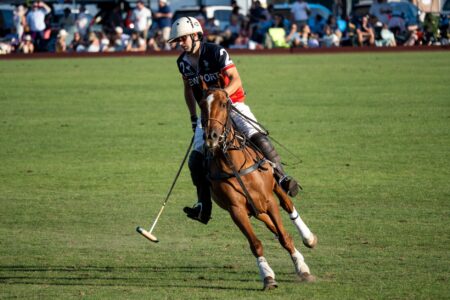
Stirrup leathers – the long, adjustable straps that connect a polo saddle’s stirrup irons to the saddle tree – have spent centuries in functional obscurity. Now they are crossing into fashion, and the translation is sharper than anyone expected.
How Equestrian Hardware Became a Trouser Detail
The stirrup leather’s defining features are its length, its buckle placement, and its narrow, purposeful profile. On a horse, it exists purely to carry weight and allow adjustment. On a pair of trousers, those same qualities read as architectural restraint – a strap that cinches, wraps, or drops along the outer seam with a precision that no ordinary belt loop system can replicate. The detail lands somewhere between utility and ceremony, which is exactly where fashion has been hunting for the past several seasons.
Designers working in the equestrian-adjacent space have been pulling directly from polo club aesthetics for a while now, borrowing mallet grips, crupper strap proportions, and browband hardware. The stirrup leather, though, presents a different design problem. Its length is the point. Where a belt is horizontal and bounded, a stirrup leather runs vertically, and that vertical pull on a trouser leg changes the entire silhouette. The leg becomes a surface rather than just a shape.
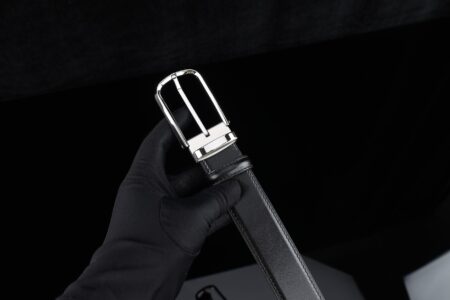
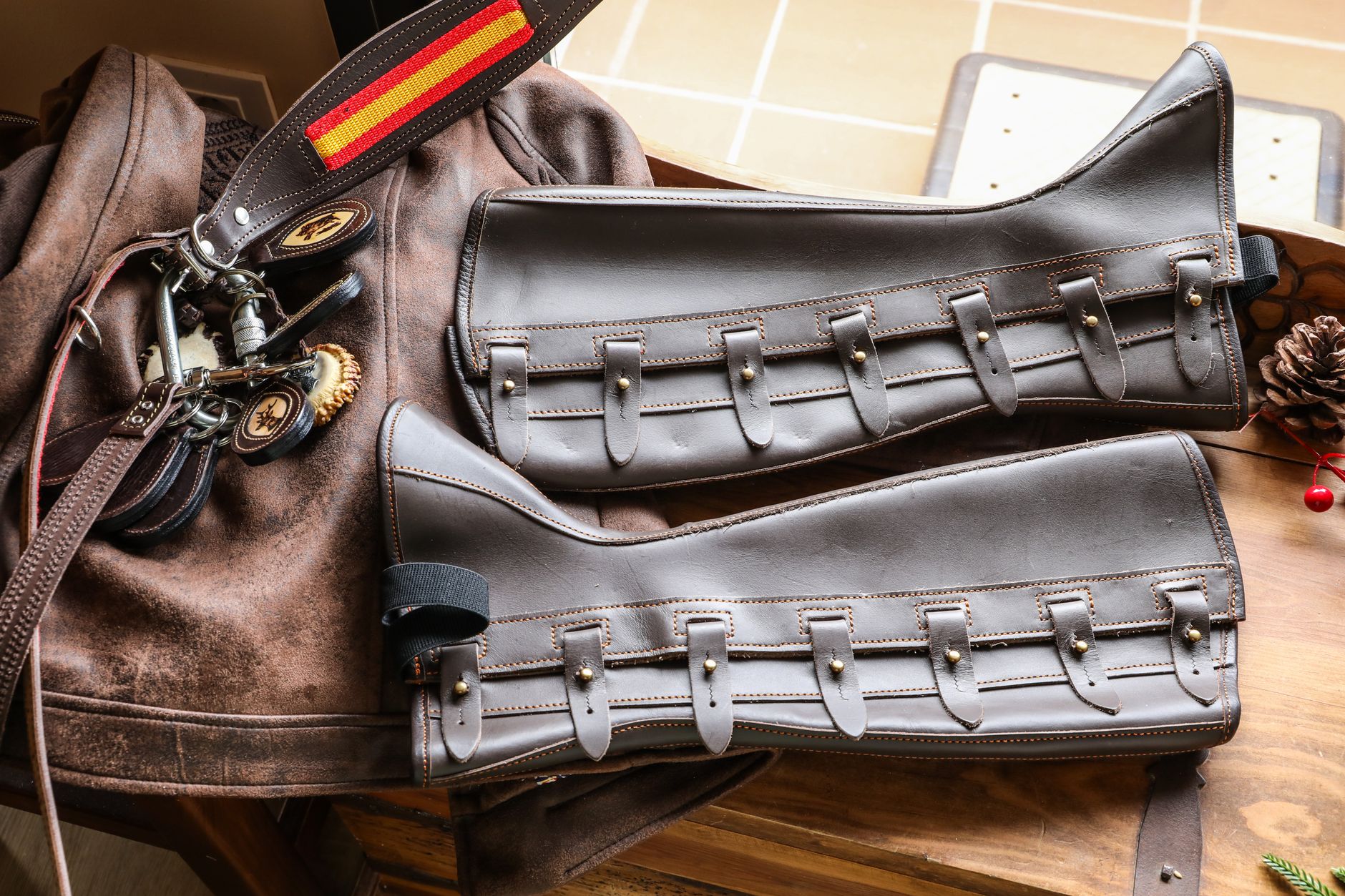
What makes this trend feel considered rather than gimmicky is the restraint with which it is being executed. These are not theatrical additions. The straps appear in tonal leather against dark wool, or in raw-edge suede against a military canvas. Buckles are simple – single-bar or roller styles pulled directly from tack room catalogs. The finishing is tight, the width kept to roughly the same 3/4-inch profile a working stirrup leather would carry. Nothing is exaggerated. The reference is specific enough that someone who rides will recognize it immediately, and subtle enough that everyone else simply sees a very clean trouser detail.
The placement varies, but the most repeated configuration runs the strap down the outer thigh, anchored at the waistband and terminating just above or at the knee with a small buckle or strap tab. Some versions wrap partially around the back of the leg, pulling the trouser fabric slightly inward and creating a fitted column effect through the lower thigh. Others sit flat against the side seam, functioning almost like a decorative inseam tape but with real hardware weight and tactile presence.
The Mechanics of the Look
Trouser strapping as a category is not new – cargo pockets have always carried exterior strap details, and military surplus aesthetics have fed into fashion for decades. What separates the stirrup leather interpretation is its relationship to tailoring. These straps are appearing on properly constructed trousers: pleated fronts, high waists, substantial fabrics. They are not being applied to utility pants or workwear silhouettes. The contrast between the precision of the tailoring and the rawness of the leather hardware is where the visual tension lives.
The mechanics also matter practically. A stirrup leather attached to a trouser functions differently from a purely decorative trim. Because the buckle is operable, the strap can be loosened or tightened, which means the trouser leg can be adjusted at the thigh – a feature that sounds minor but changes the relationship between the wearer and the garment. Clothes that respond to the body, that can be cinched or released depending on movement or mood, carry a different kind of authority than clothes that simply fit or don’t. The adjustability is part of the point.
Fabric pairings are doing a lot of work in how this detail reads. Heavyweight cavalry twill is the obvious choice, and it works precisely because cavalry twill was always adjacent to equestrian dressing. But the more interesting iterations are appearing in unexpected cloths: a boiled wool with a dark chestnut leather strap, a chalk-stripe worsted where the strap interrupts the vertical line of the stripe with deliberate awkwardness, a raw silk trouser where the contrast between the fabric’s sheen and the matte leather feels almost confrontational. The strap doesn’t need to match the fabric’s register. The friction is productive.
Color is being handled conservatively. Tack leather – the warm mid-brown that anyone who has spent time around horses will recognize immediately – is the dominant shade, followed by a near-black bridle leather. Lighter natural tan appears occasionally, and a small number of pieces are working with vachetta, which starts pale and ages to a honey gold with wear. What is almost entirely absent is dyed or painted leather in fashion colors. The decision to keep the hardware tonal and grounded connects the detail back to its functional source and stops it from reading as costume.
Construction details borrowed from the tack room are appearing in the finishing: beveled edges, burnished with a bone folder or edge tool; hand-stitched double rows along the strap length in waxed thread; small Chicago screws instead of rivets where the strap anchors to the waistband. These are the details that separate a leather trim from an actual strap, and designers who are getting this right are clearly working from reference material rather than approximation. The difference between a strap that looks like a stirrup leather and one that is constructed like one is visible from across a room.
Who Is Wearing This and Why It Holds
The silhouette this detail produces is narrow, deliberate, and slightly severe. It suits a specific kind of dressing – one that is interested in structure and in the idea of clothing as something you put on with intention. The polo club reference adds a layer of coded meaning: this is aristocratic sport, old money leisure, a world where functional objects are also objects of real craft. Wearing that reference on a tailored trouser is a way of accessing that aesthetic without the full costume of a polo kit. It is specific without being literal.

The longer question is whether this detail has staying power beyond the current appetite for equestrian references, or whether it peaks with that trend and recedes. Trouser hardware with real construction logic – adjustable, operable, made to last – tends to hold better than purely decorative trim. The stirrup leather detail is earning its place not by being fashionable but by being functional in a way that happens to look considered. Whether that is enough to carry it past the moment it was born in is the question no one at the polo club is asking yet.
Frequently Asked Questions
What are stirrup leathers in a fashion context?
In fashion, stirrup leathers refer to narrow, buckled leather straps modeled after polo saddle hardware, applied vertically along the outer seam or thigh of tailored trousers.
How do stirrup leather trouser straps differ from regular decorative trim?
Unlike purely decorative trim, stirrup leather straps are constructed with operable buckles, beveled edges, and hand-stitched finishing – meaning they can actually be adjusted on the body.