

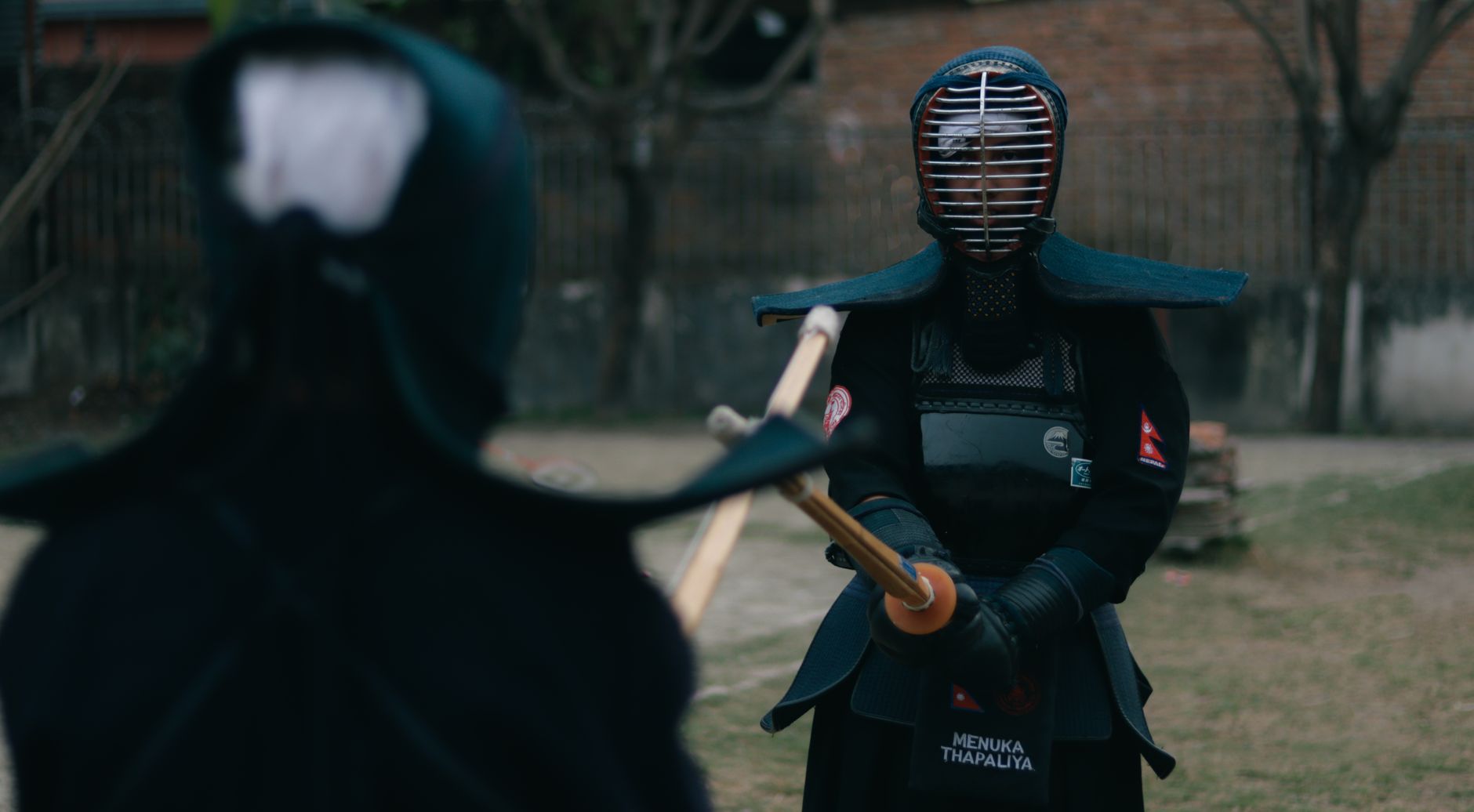
Kendo’s men’s do throat guard – the rigid, structured piece that sits at the base of the helmet and protects the larynx during sparring – was never meant to leave the dojo. It exists for one reason: to absorb impact from shinai strikes at close range. But somewhere between the practice floor and the runway, designers began looking at its profile differently. The hard horizontal line it creates across the lower neck, the layered plates that fan slightly outward, the way it frames the jaw from below – all of it translates with surprising directness into jewelry and accessory design.
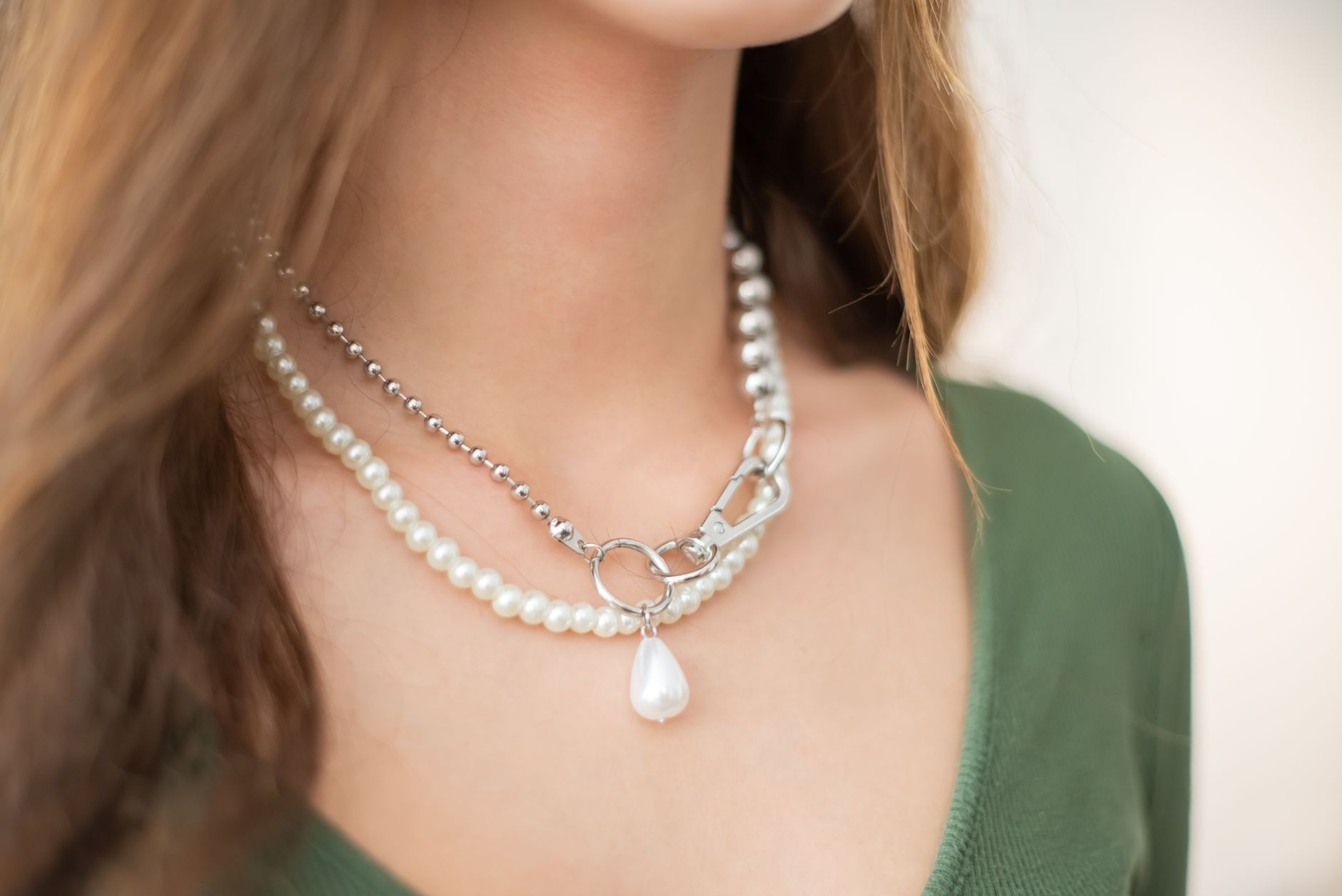
The choker category has been expanding for years, moving well past the velvet ribbon and thin gold chain into structural territory. What kendo throat guards offer that most jewelry sources cannot is a ready-made geometry: concentric, slightly curved horizontal bands that sit flush against the neck without the need for architectural invention from scratch.
This is sport equipment functioning as a design blueprint.
Reading the Shape
The men’s do throat guard, called the tare-dare or more specifically the men-dare component, consists of stacked horizontal flaps reinforced with stitching and often faced in leather or synthetic materials. The overall profile is wide, relatively flat, and sits at a slight angle – lower at the center, rising slightly toward the jaw on either side. That specific geometry is what makes it interesting to fashion. Most chokers either sit perfectly flat (like a collar) or curve inward (like a necklace). The throat guard’s slight downward bow at center, with the outer edges sitting higher, creates a shape that frames the neck in three dimensions rather than simply encircling it.
Designers working in sculptural jewelry – particularly those experimenting with layered brass, oxidized silver, and structured resin – have been gravitating toward exactly this kind of angular horizontal massing. A piece that references the throat guard’s stacked-plate construction reads as architectural without feeling cold, because the slight curve keeps it body-conscious. When you translate the material into hammered metal or matte ceramic, the martial arts origin disappears entirely, and what remains is a very specific kind of neck geometry that looks both modern and ancient at the same time.
It also solves a proportion problem that sculptural chokers often struggle with. Too much vertical height looks like armor. Too little looks like an afterthought. The throat guard’s proportions – wide in horizontal span, modest in vertical depth – hit a natural balance that works across multiple necklines without dominating the entire look.
Where It Shows Up
The influence appears most clearly in layered metal chokers using two or three stacked bands of varying widths, where the widest sits lowest and the narrowest sits closest to the jaw. That stacking logic mirrors the throat guard’s flap construction almost exactly. Some emerging accessory labels have been working with hand-formed sheets of oxidized brass in exactly this configuration – wide base band, medium middle, narrow top – creating a collar that reads as intentional architectural design rather than a reference to anything protective.
Beyond jewelry, the silhouette is showing up in structured neckwear: wide grosgrain collar pieces, layered organza neck bands, and even the occasional sculpted leather collar attached separately from the garment itself. These pieces borrow the throat guard’s horizontal authority without reproducing its bulk. In womenswear, they pair naturally with deep V-necklines and scoop necks, where the choker takes over the visual work of framing the upper body that the neckline itself leaves open. The throat guard’s logic – protect and define the throat zone – translates into pure aesthetics without losing any of its geometric conviction.
There is also a growing interest in the material language of protective sportswear as a source for jewelry texture. The vertical stitching lines that run through kendo throat guard flaps create a ribbed, segmented surface that several jewelry designers have replicated in engraved or embossed metalwork. This detail alone gives a flat choker the visual complexity of something engineered, which is precisely the quality that separates a $20 choker from one commanding serious retail prices.

Why This Particular Sport, Why Now
Kendo equipment has a visual restraint that most Western martial arts gear lacks. The color palette – predominantly black, deep indigo, and navy, with white stitching – already reads as editorial. The forms are structured but not aggressive-looking in the way that, say, boxing headgear or MMA protective gear tends to be. There is a formality to kendo equipment that makes the design transfer easier. A throat guard does not look like a weapon or a cage. It looks like a very serious piece of structure, which is exactly what sculptural jewelry aims to communicate.
The broader interest in martial arts aesthetics in fashion has been building, with everything from judo silhouettes influencing outerwear cuts to protective chin strap forms influencing sculptural jaw jewellery. What sets kendo apart is the specificity of its protective geometry. Each piece of kendo armor has a very clear functional logic, and that functional logic produces shapes that are more refined than padded, more architectural than bulky. The men’s do throat guard in particular produces a silhouette that is almost impossible to arrive at through purely decorative invention.
There is also the question of cultural timing. Japanese craft traditions – lacquerwork, boro textile repair, sashiko stitching – have been informing design conversations across fashion and accessories for several seasons now. Kendo equipment sits within that cultural lineage without being explicitly traditional in a costume sense. It connects to a living practice with a current aesthetic, not a museum reference.
What makes this trend genuinely interesting, rather than simply clever, is that the throat guard’s proportions are not flattering by accident – they were engineered to sit well on a human neck without restricting movement or breath. A jewelry designer who borrows that geometry inherits not just an aesthetic but a problem-solution relationship that has been refined over centuries of Japanese martial arts practice. The piece already knows how to sit on a body.