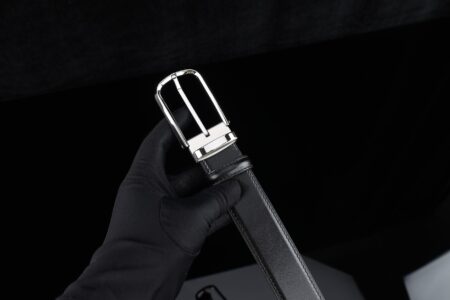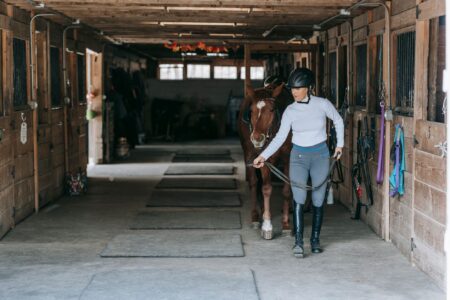


Equestrian hardware has a long history of quietly influencing fashion, from stirrup hardware on heeled boots to bridle leather on handbags. The latest crossover is more structural – and more unexpected: girth billets, those short leather straps that buckle a saddle’s girth beneath a horse’s belly, are showing up in ready-to-wear as the defining detail of a new wave of corset-style tailoring.

From the Stable to the Silhouette
Girth billets are not decorative by nature. On a polo saddle, they sit hidden beneath the saddle flap, doing the hard work of keeping the girth locked in place under the pressure of a galloping horse. There are typically three per side, set closely together at varying lengths so the girth can be doubled-buckled for security. That staggered, triple-strap configuration – functional, slightly obsessive in its redundancy – is exactly what makes it so interesting as a fashion reference.
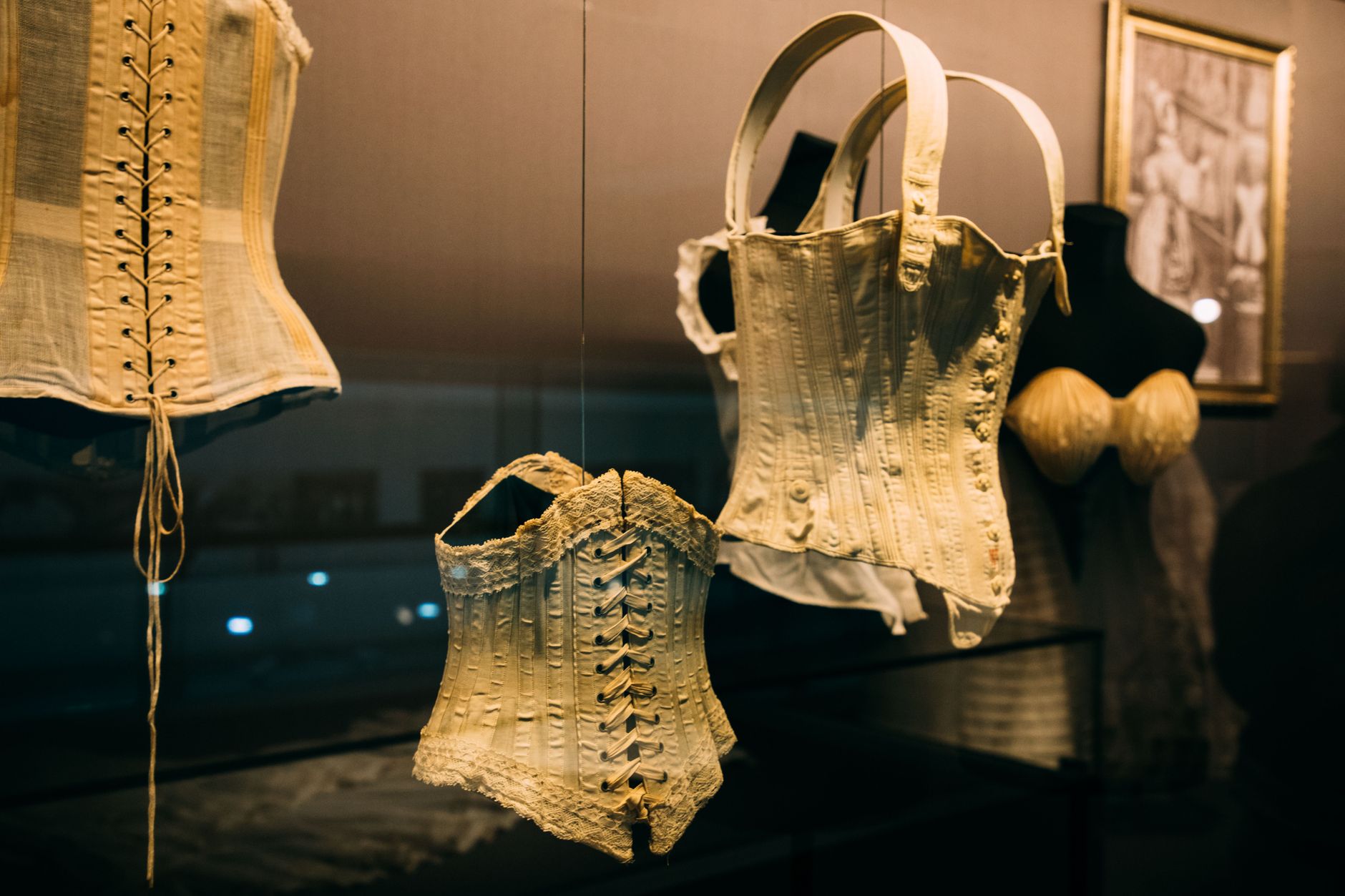
Corset boning has historically served a similar purpose: structural containment through repeated, evenly spaced vertical channels. When you place girth billet hardware over a boned bodice, the visual logic aligns almost immediately. Both systems are about managed compression. Both telegraph effort and intention through visible mechanics. The buckle isn’t hiding anything – it’s the point.
A growing number of designers are working this tension into their collections, building bodices and belted jackets where flat brass or gunmetal buckles run vertically up the front or side seam, mimicking the staggered position of billets on a saddle flap. Some versions keep the leather straps short and close-set, staying true to the equestrian source. Others elongate them into full waist-cinching columns that recall Victorian stays more than anything you’d find in a tack room.
What separates this from previous equestrian-fashion borrowings is the specificity. It’s not a vague “riding aesthetic” or a heritage leather moment – it’s a direct structural citation. The girth billet detail reads as technical to anyone who rides, and reads as avant-garde tailoring to everyone else. That double fluency is increasingly the mark of a trend with staying power.
Why Corset Boning Makes the Perfect Host
Corset construction has been cycling through fashion for several seasons now, moving from the literal (visible boning channels, lace-up backs) toward something more architectural. Boned bodices in structured suiting, boned inserts in eveningwear, boning used as surface detail rather than undergarment scaffolding – the direction has been toward exposure and theatricality. Girth billet detailing slots into that trajectory with unusual precision.
The reason the pairing works structurally is that both elements share a vertical orientation and a strong preference for symmetry. Corset boning runs in parallel channels from bust to hip. Girth billets stack in tight vertical rows. When a designer maps one onto the other, the result isn’t costume – it reads as intentional design logic. The buckles don’t float on the surface; they appear to hold something together, which is exactly what boning does from the inside.
There is also a material compatibility that helps the look land without tipping into confusion. Girth billets are traditionally made from bridle leather – dense, smooth, with a controlled sheen. That weight and finish sits well against the heavyweight satins, technical wools, and compressed linens that tend to host corset construction. A stiff leather strap buckled over duchess satin has visual authority. The same strap on a jersey knit would look like an afterthought.
Colorwise, the trend is running almost entirely in neutrals – black on black, caramel leather against cream, dark chocolate against charcoal. The restraint makes sense: when the structural detail is this bold, competing color would flatten the effect. A few pieces have pushed toward contrast, with bright brass hardware set against deep burgundy boning channels, but the more refined versions stay tonal. The hardware does the work; everything else recedes.
This detail also travels well across formality. A blazer with girth billet closures at the waist reads as sharp tailoring for office or dinner. The same hardware on a strapless corset top becomes evening wear. A wide cinch belt using three staggered billets can anchor a simple trouser look or anchor a full skirt. The reference is consistent; the context changes the register entirely. That kind of range is why this particular detail has moved beyond runway novelty and into the territory that stylists and buyers actually find useful.
What to Watch For in Styling
The cleanest way to wear this detail is to resist adding more hardware elsewhere. Girth billet buckles are not minimalist, and stacking them with chain belts, logo buckles, or grommeted boots creates visual competition that undermines the precision the look depends on. The equestrian reference already carries a certain formality – riding clothes have never been casual, even when worn casually – and that seriousness is worth protecting in how the rest of the outfit is built.
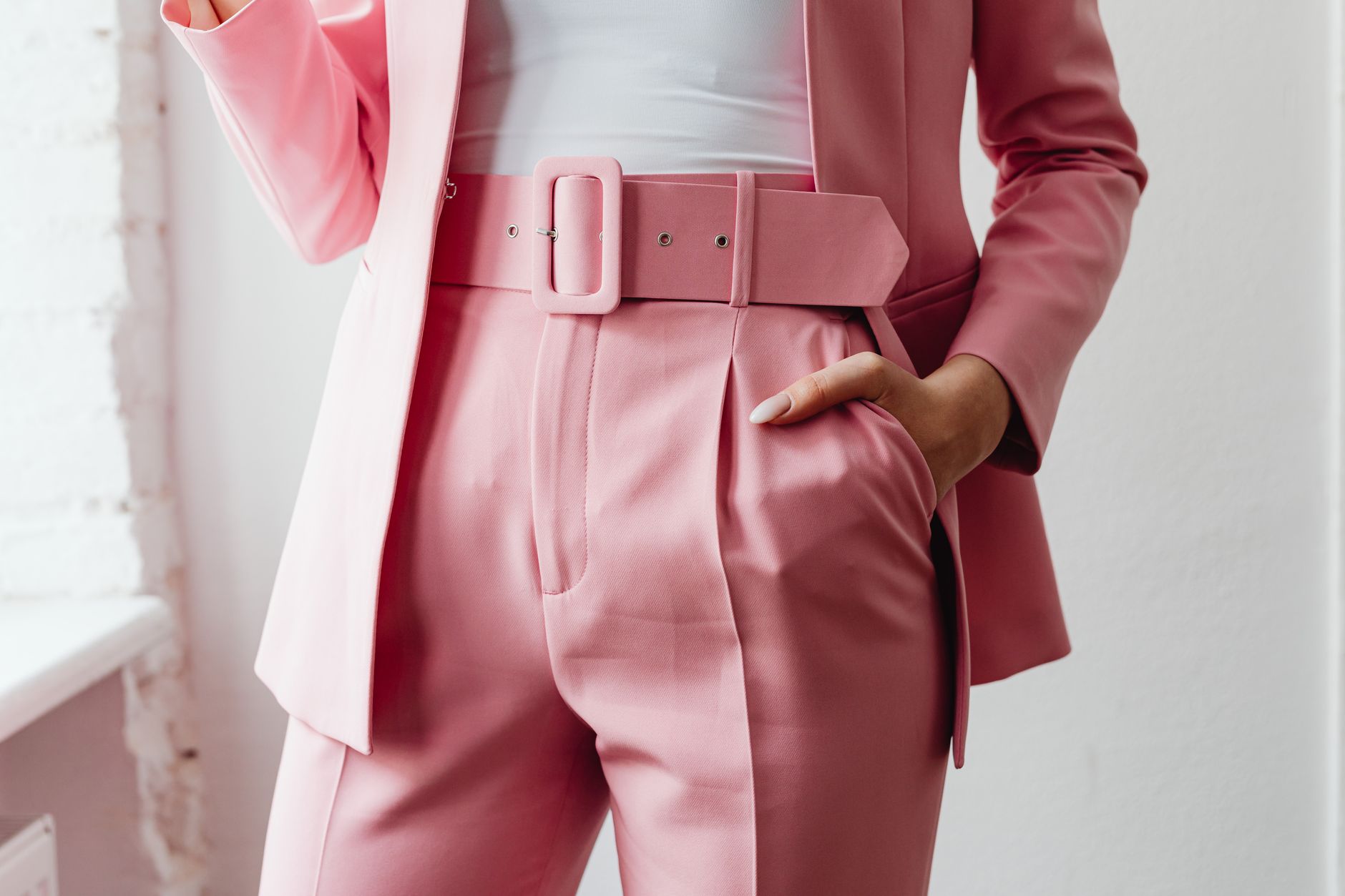
Proportions matter more here than in most trends. Because the billet detail draws the eye to the torso and specifically to the waist-to-hip zone, the pieces above and below should be relatively clean. Wide-leg trousers, straight-cut midi skirts, or simple column silhouettes all let the structural detail read clearly. The risk with oversized layering on top is that it swallows the very construction the garment is built around – which is a particular problem when the construction is the garment’s entire argument. Polo saddle flap skirts working into midi silhouettes offer one clean lower-half solution that keeps the equestrian language consistent without repeating it too literally.