

Equestrian hardware has always carried a certain authority – clean lines, purposeful construction, zero decoration for decoration’s sake. Now that same design logic is showing up in rings, bracelets, and necklace closures, with rein stop hardware specifically driving the shift toward structured minimalism in fine and contemporary jewelry.

What Rein Stop Hardware Actually Is
A rein stop is a small, precisely engineered component fitted onto polo and equestrian reins to prevent the rider’s hand from sliding past a fixed point. It typically presents as a flat or slightly raised band of metal – often brass, stainless steel, or nickel – with a tight fastening mechanism on one side and a smooth, uninterrupted face on the other. Its entire function is grip and control, which means excess ornamentation would work against it. The result is an object that looks like it was designed by someone who genuinely did not care about aesthetics, and landed there anyway.
That tension between utility and visual restraint is exactly what jewelry designers are drawing from. A rein stop doesn’t announce itself. It sits on a strap and does its job, but photographed close-up or lifted out of context, it reads as a considered piece of hardware design – smooth on three sides, articulated on the fourth, with a proportional weight that feels intentional. That quality is difficult to achieve in jewelry without years of iterative prototyping, and here it exists already, solved by the demands of a sport.
The connection between equestrian equipment and fashion is well-established. Bridle bits, stirrups, and snaffle rings have cycled through accessory design for decades. What makes the rein stop moment feel distinct is the scale. This is not a recognizable silhouette borrowed wholesale – it’s a specific structural detail that most people couldn’t name, filtered into hardware language that reads as simply modern. The reference is present but not performative.
Polo club aesthetics more broadly lean toward a particular kind of understatement: technical fabrics worn without technical branding, heritage leather goods with no visible logos, and hardware that signals quality through proportion rather than embellishment. Rein stop geometry fits that register precisely. The flat band format, the side-mounted closure, the absence of surface texture – all of it translates without alteration into the vocabulary of quiet luxury accessories.

How the Hardware Translates Into Ring Design
The most direct translation appears in wide band rings that incorporate a side-set closure mechanism rather than a traditional soldered seam. Where a standard ring closes invisibly, a rein stop-influenced ring makes the fastening point a deliberate feature – a small bar, pin, or lever set flush with the band’s surface. The ring still reads as a single continuous form, but there’s one moment where the eye catches something functional. That detail changes the whole reading of the object.
In sterling silver and yellow gold, this design approach produces rings that sit comfortably alongside architectural minimalist jewelry – the kind that has dominated fine jewelry social media for several years now. The difference is tactile as much as visual. Rein stop-derived hardware tends to produce a slightly heavier feel in the hand, a denser sense of construction, because the mechanism requires material depth that a polished band alone does not. Wearers who have tried both describe the rein stop format as feeling more like equipment and less like decoration, which is precisely the appeal for a specific type of buyer.
Bracelets are picking up the influence just as readily. A flat cuff with a rein stop-style fastening on the outer wrist – rather than hidden at the inner wrist as most cuff closures are – changes the geometry of how the bracelet reads when worn. The closure becomes a focal point, a punctuation mark on the wrist. Some designers are working with a double-bar version, where two parallel closures sit side by side, directly echoing the dual rein stop format used on polo reins to accommodate split-rein handling.
Necklace hardware is slower to adopt the detail but moving in the same direction. Barrel clasps have already been absorbed into the minimalist design toolkit, and the rein stop offers the next iteration – a closure that presents as a flat rectangle or square on the back of the neck, sitting flush against the skin, with no protruding hook or loop. For long chain designs worn at collarbone length, this produces a clean, uninterrupted line that traditional spring ring clasps disrupt. The closure disappears into the chain’s geometry rather than interrupting it.
There is also a growing interest in mixed-material applications, where the rein stop-format hardware is executed in oxidized brass or blackened steel against a softer leather or cord body. This combination leans further into the equestrian source material and produces pieces that exist somewhere between bracelet and cuff, between jewelry and accessory. The polo club spur strap aesthetic has already demonstrated that ankle-level hardware in this mixed-material format carries real commercial momentum, which suggests the wrist and neck applications will follow with a short lag.
Why Restraint Is the Point
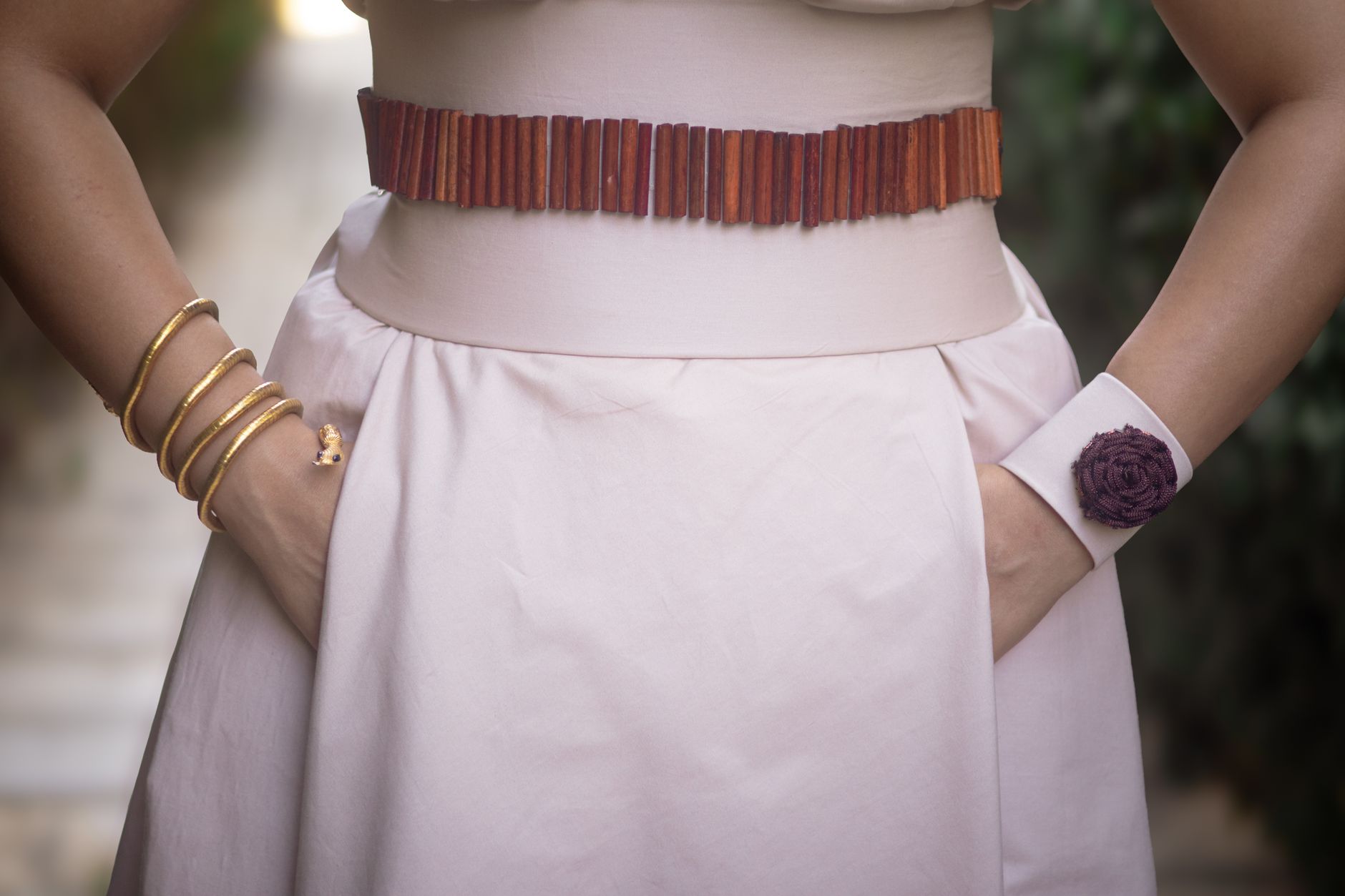
The appeal of rein stop hardware in jewelry is not that it looks equestrian. Most wearers have no interest in signaling a connection to polo. The appeal is that the hardware carries an internal logic – every element of the design exists because it must, not because it looks good. That kind of disciplined construction is genuinely rare in jewelry, where decorative instinct tends to override functional clarity almost immediately. Rein stop-derived pieces hold the line against that instinct, and the result reads as confident rather than austere.
The real question for this trend is how long designers can resist the urge to elaborate. The rein stop is so visually specific in its restraint that any additional surface treatment – engraving, stone setting, decorative texture – would undermine the quality that makes it interesting. The hardware works because it looks like it was made for something other than looking good. Once it starts trying to look good, it becomes just another closure detail.