

The Armor Underneath
Kendo’s do – the rigid chest guard worn in Japanese swordsmanship practice – is built for punishment. Constructed from lacquered bamboo or molded resin, lashed to the body with thick braided cord, and designed to absorb the full force of a bamboo sword strike, it is functional armor in the most literal sense. It is also, as of this season, quietly becoming a blueprint for high-fashion bodice construction.
What’s happening isn’t cosplay or a direct cultural transplant. It’s structural borrowing – designers pulling from the do‘s geometry, its grid-like panel segmentation, its aggressive projection away from the body, and applying that logic to the rigid bodice panels appearing across runway collections and avant-garde ready-to-wear. The silhouette says armor. The context says evening wear or tailoring. The tension between those two readings is precisely the point.
This is wearable architecture with a fighting stance.

Why the Do Works as a Design Source
The do chest guard has a visual vocabulary that translates well to fashion precisely because it was never meant to be decorative – and yet it is. The horizontal banding across the chest, the way the structure flares slightly at the lower edge to allow hip movement, the use of contrasting cords that create a second graphic layer over the primary form: all of this reads as deliberate composition when removed from its martial context. Fashion has always raided functional objects for their aesthetic logic, and the do offers a particularly rich source because its form is so unapologetically three-dimensional.
The grid segmentation is the most directly useful element. Traditional do panels are divided into horizontal rows – either solid lacquered plates or woven bamboo slats – which give the structure both flexibility and rigidity depending on where force is applied. In fashion terms, this translates into bodice boning that doesn’t just support the body but creates visible geometry on top of it. Designers are using channeled panels, layered resin inserts, and structured interlining to replicate that segmented effect without the weight of actual armor. The result sits away from the body in a way that standard boning never quite achieves.
The lacing system is getting equal attention. The do‘s decorative cords – called odoshi – run vertically and horizontally across the guard’s face, in colors that historically signified clan or rank. Contemporary versions replace the cords with visible hardware, contrast stitching, or ribbon-threaded eyelets that reference the original without replicating it. This detail is what pushes the reference from structural to conceptual. The garment isn’t pretending to be armor. It’s acknowledging the debt and moving forward.
Where the Silhouette Is Landing
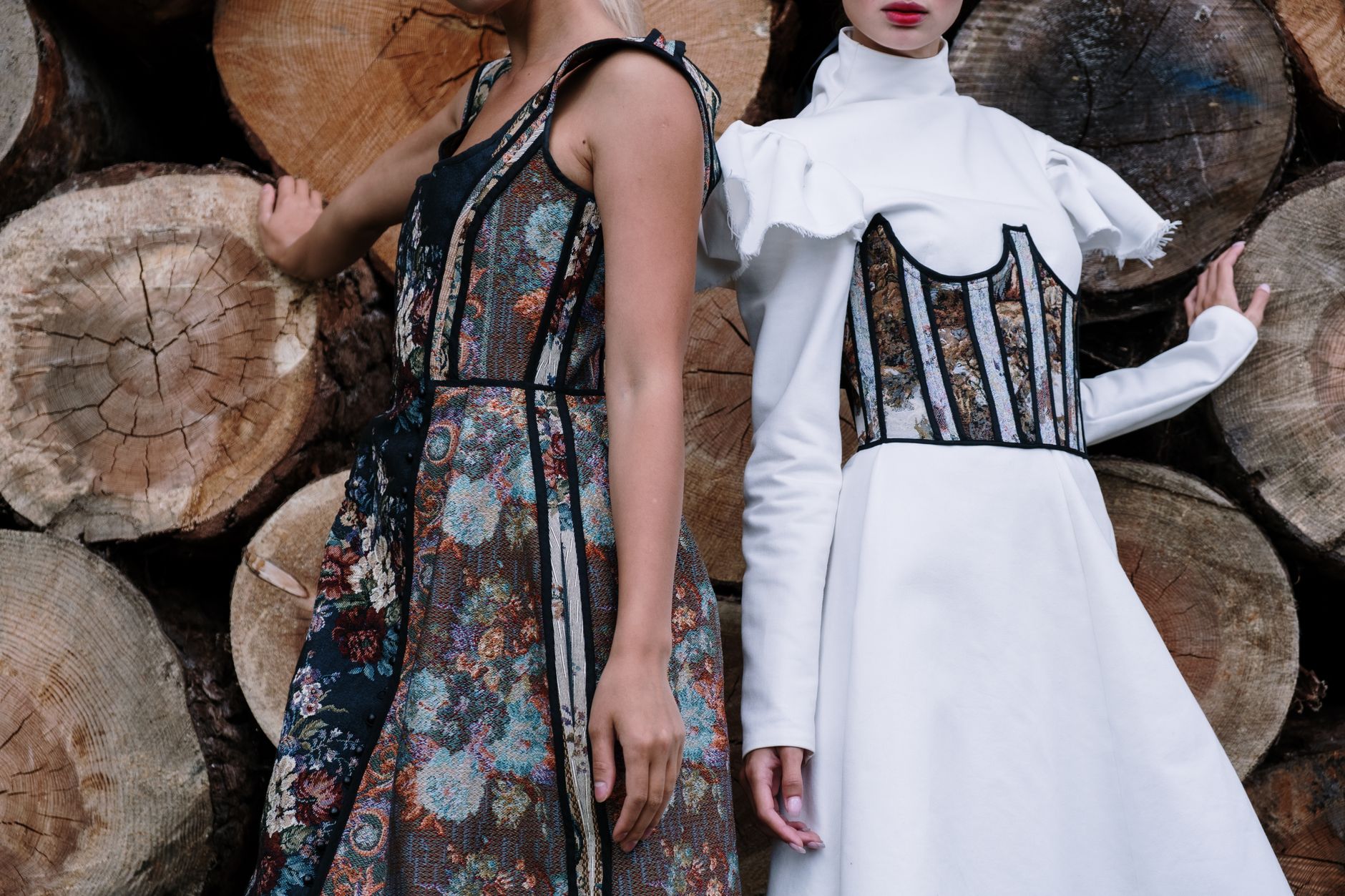
The bodice panels drawing most directly from kendo construction are appearing in two distinct contexts: sculptural eveningwear with minimal skirt volume, where the chest piece carries the entire visual weight of the look, and in tailored suiting worn over relaxed shirting, where the rigid panel reads more like a decorative breastplate layered over conventional dressing. Both approaches treat the chest guard logic as an external element – something worn over the body rather than built into a garment. That distinction matters because it maintains the armor’s conceptual identity. You’re not wearing a structured dress. You’re wearing a chest guard with clothes underneath it.
The color palette running through these pieces skews dark and technical – matte blacks, deep oxblood lacquer finishes, and the occasional stark white that references the underpinnings of traditional kendo keikogi. Hardware choices run to oxidized metals and flat matte buckles rather than polished fasteners, which keeps the aesthetic away from fantasy-armor territory and closer to the functional sobriety of actual martial arts equipment. The goal, in most of these pieces, is to look like something you could actually train in – even if training in couture would be genuinely inadvisable.
The sizing and proportioning of these panels is where individual designers are making their sharpest distinctions. Some versions stop at the natural waist, mimicking the do‘s traditional lower edge almost exactly. Others extend into the hip, transforming the chest guard reference into something closer to a full torso breastplate – which shifts the silhouette entirely, pushing toward science fiction rather than martial tradition. The more restrained interpretations, those that respect the do‘s actual proportional boundaries, are the ones that feel most genuinely connected to the source rather than just using “armor” as a general mood board category.

The Structure Holds
What makes the kendo do a more durable fashion reference than previous armor trends is that it carries real functional logic – every aspect of its construction solves a specific problem, and that problem-solving discipline keeps the fashion interpretations honest in a way that purely decorative armor references rarely are. The segmentation isn’t ornamental; it allows movement. The projection isn’t dramatic posturing; it’s deflection geometry. When designers respect that functional intelligence rather than just lifting the visual surface, the resulting pieces have a structural confidence that reads immediately – even to someone who has never set foot in a dojo.