

The Small Detail Making a Big Argument for Restraint
Collar pins have been a fixture of menswear for over a century, holding the spread of a dress shirt neatly in place beneath a tie. Now, borrowed from the aesthetic vocabulary of polo clubs and equestrian dressing rooms, they are turning up on women’s shirts, unstructured button-downs, and crisp oxfords – worn with nothing underneath, no tie required, no occasion necessary.

Where the Trend Is Coming From
The polo club connection is more than decorative. Traditional collar pins in equestrian and polo contexts served a practical function – keeping the collar flat and authoritative during physical activity, maintaining a clean line under jackets worn at matches and paddock gatherings. The hardware was typically gold or silver bar-style, sometimes with a slight curve to cradle the collar’s underside. That precision is exactly what is drawing contemporary dressers to the accessory now.
Minimalist dressing has been leaning harder into texture and detail because the silhouettes themselves leave so little room for personality. When you are wearing a white poplin shirt tucked into straight-leg trousers, the collar pin becomes one of the only places where individual taste can register. It is a very small canvas, which is part of why the effect feels so intentional when it lands well.
The polo club aesthetic has been feeding fashion’s appetite for sporting heritage for several seasons running. Polo club peaked caps have already made their case in everyday casual dressing, pulling the same thread – that the most dressed-down, functional details of equestrian sport carry an elegance that translates well outside the paddock. Collar pins fit that logic exactly.
What separates this moment from past collar pin revivals is the styling context. Earlier iterations in mainstream fashion tended to position the pin as a formal or retro-themed accessory, something worn with vintage-inspired suiting or deliberately old-fashioned outfits. The current approach is the opposite – the pin is being worn with relaxed, modern separates, functioning as a counterpoint to the ease of the rest of the look rather than a signal of formality.
How Styling Actually Works
The mechanics of wearing a collar pin on an everyday shirt require some attention. The piece works best on shirts with a collar that has enough structure to hold its shape – a very soft, unlined collar will buckle under the pin’s weight and lose the clean horizontal line that makes the accessory worth wearing in the first place. Oxford cloth shirts, poplin button-downs, and any collar with a moderate spread tend to be the most cooperative.
Placement matters more than most people expect. The pin should sit close enough to the collar’s base that it visibly lifts the collar points slightly, creating a gentle arch at the front of the neck. When the pin is positioned too high, the collar looks flat and the effect disappears. When it sits too low, it reads as a brooch rather than a collar pin, which changes the whole register of the piece.
In terms of metal finish, the polo club aesthetic skews toward gold and brass tones – the warmth of those metals connects back to the hardware found on bridles, stirrups, and riding jackets. Silver and gunmetal finishes read slightly cooler and more architectural, working well if the rest of the outfit leans toward grey, navy, or black. Both directions work, but mixing warm metal collar pins with cool-toned jewelry elsewhere in the outfit tends to create visual noise in an otherwise clean look.
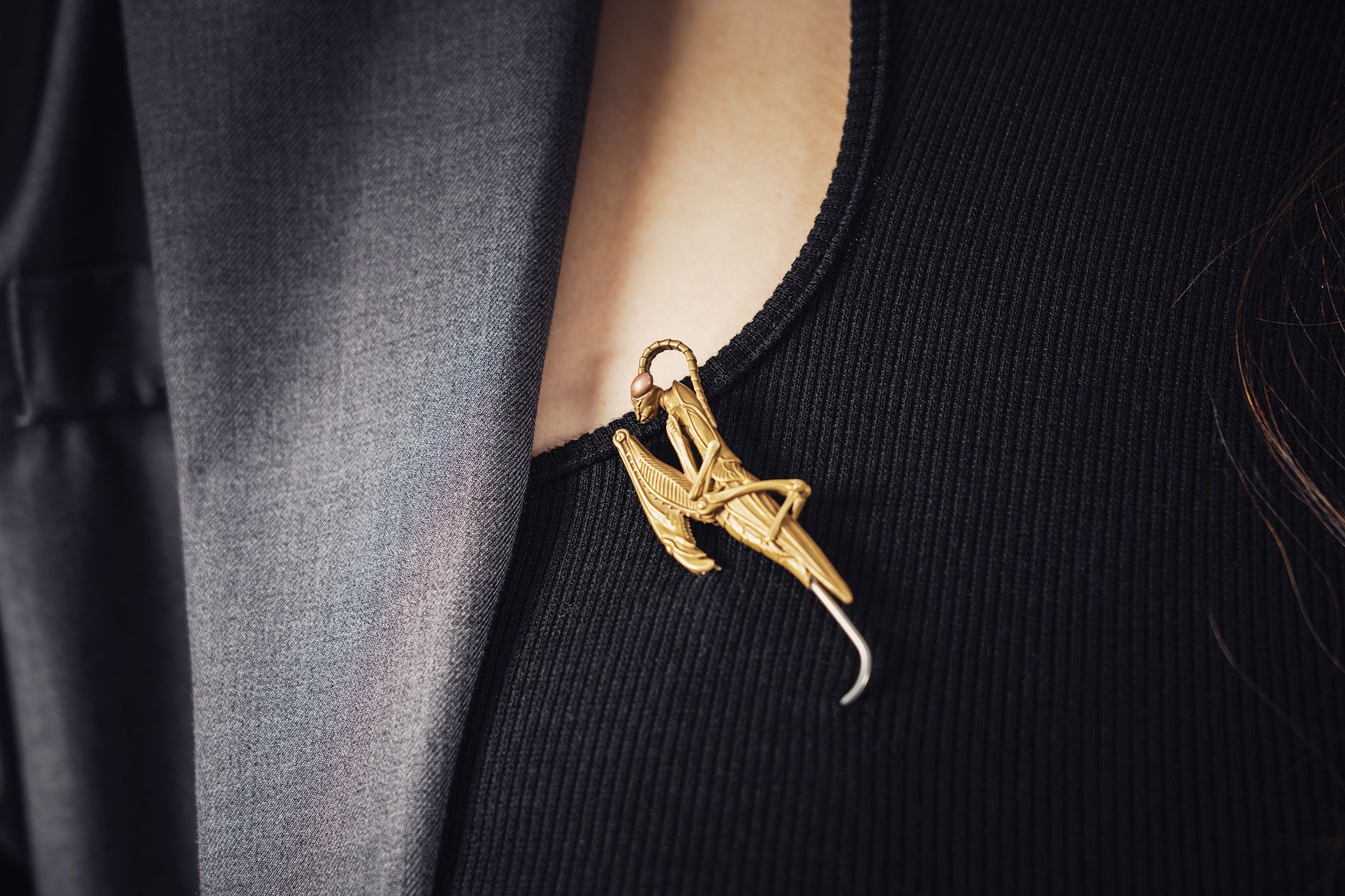
Bar-style pins with simple rounded or flat ends are the most wearable starting point. The market also offers pins with small decorative elements – a tiny equestrian motif, a knot, a subtle engraving – and those work without being costume-y as long as the rest of the look stays stripped back. The detail on the pin can carry some weight precisely because nothing else is competing with it.
Layering is one point where the collar pin shifts from accessory to structural tool. Worn under a blazer with the collar left outside the lapels, the pin frames the neck in a way that feels deliberately composed. Worn with an open collar and no layers, it reads more casual but still intentional. What it does not tolerate well is being buried under a heavy scarf or a crewneck – the pin needs to be visible to do anything at all.
The Gap Between Minimal and Boring
Minimalist dressing carries a persistent risk of looking unfinished or simply uninteresting, and collar pins address that without adding bulk, color, or complexity. A plain white shirt with a gold collar pin is still a plain white shirt – but it is one that signals a considered point of view. That is the specific gap the accessory fills, and it explains why the styling choice tends to read as confident rather than overdressed.

The harder question is whether the collar pin stays legible as dressing becomes more casual across the board. The accessory depends on shirts with a certain amount of structure, and as the center of everyday dressing shifts further toward jersey, knitwear, and unstructured layers, the pool of garments that can host a collar pin naturally shrinks. For now, the shirt is holding its ground as a wardrobe anchor – but the collar pin’s continued relevance is tied directly to whether the dressed-down oxford keeps its place in the rotation.