


When Equestrian Utility Meets Street-Level Dressing
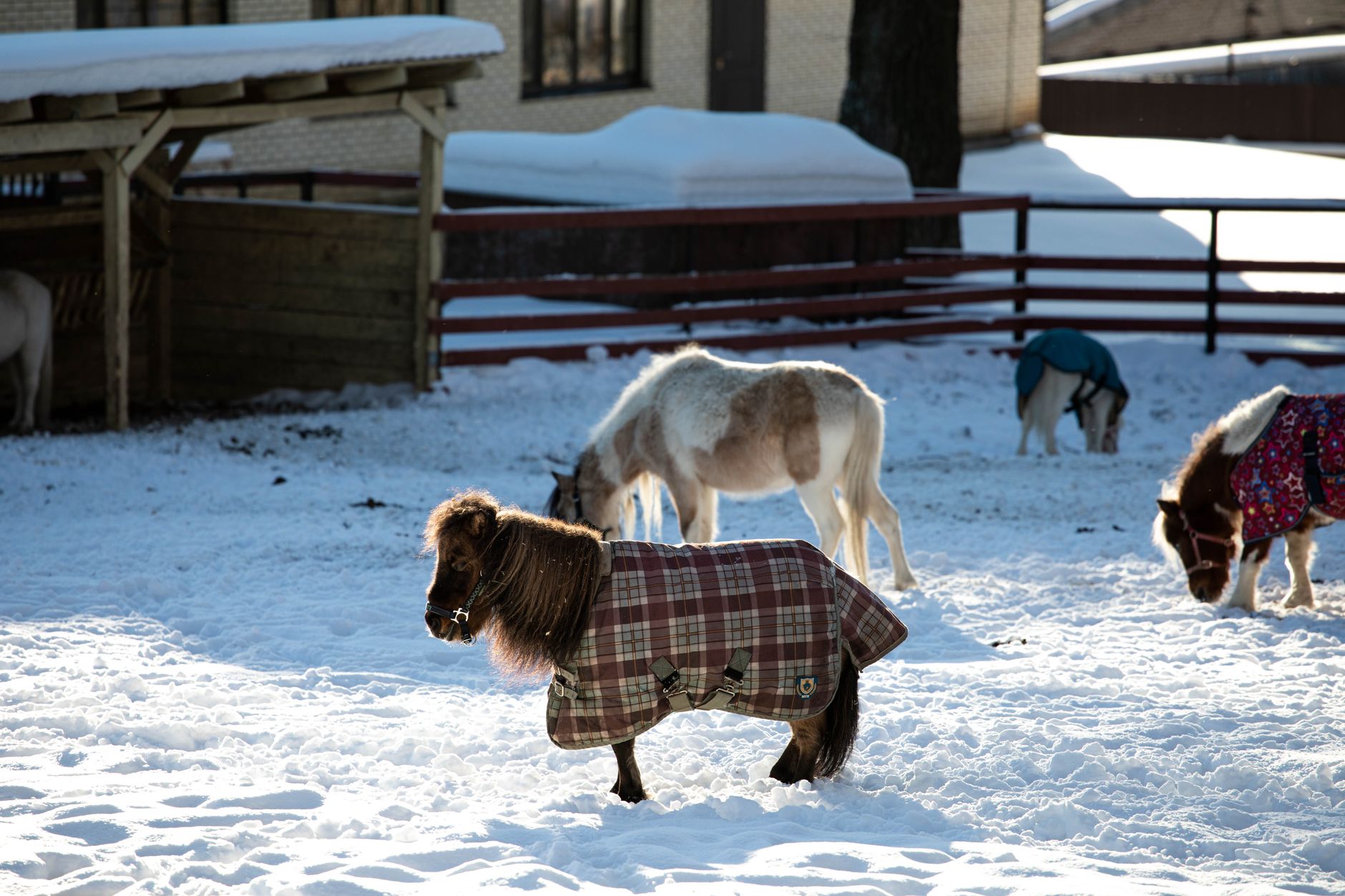
The polo exercise sheet – that large, blanket-like drape traditionally thrown over a horse’s back to keep muscles warm between chukkers – has no obvious reason to appear on a fashion rack. It is thick, structured at the neck, cut wide and long, and designed entirely around the anatomy of a 1,200-pound animal. That is precisely why designers and stylists are reaching for it. The garment’s strangeness is the point, and its proportions, which were never meant for a human silhouette, are turning out to be exactly what the current oversized outerwear moment needs.
A growing number of brands experimenting at the edge of equestrian and streetwear are recontextualizing the exercise sheet as a coat alternative. The references are recognizable to anyone who has spent time near a stable: the deep neck opening, the generous back sweep, the sometimes embroidered or color-blocked panels that identify a horse’s home club. Pulled onto a body, those same design elements read as a dropped-shoulder coat with unexpected heritage weight behind it.
The Silhouette and Why It Translates
Exercise sheets are cut to drape over a horse’s withers and extend back past the haunches, which means the rear hem is dramatically longer than the front. On a person, that uneven hem – short at the chest, long at the back – creates an asymmetric silhouette that feels both athletic and editorial. Paired with straight-leg trousers or wide-leg denim, the shape reads as intentional rather than accidental. The front stays clear and neat while the back falls in a heavy, structured sweep that moves differently from any conventional coat.
The fabrication also matters here. Traditional exercise sheets use wool fleece, thermal canvas, or quilted ripstop, all of which carry visual weight and structure without bulk. These are not soft, collapsing fabrics. They hold a shape when worn, which is rare in the oversized category, where garments often read as simply too large rather than deliberately scaled. An exercise sheet draped over a person maintains its geometry, and that geometry is what separates the look from wearing a blanket.

Club Markings as the New Brand Language
Polo clubs historically used color and embroidery to identify their horses on the field – a tradition that is now being read as a design system in its own right. The bold color blocking that runs along a sheet’s spine or hem, the embroidered initials or crests at the neck, the contrast piping that outlines the cut – all of these function the way a label or logo functions on a luxury coat, except the visual language carries an older and more specific origin story.
Some independent designers working in this space are sourcing vintage exercise sheets directly from polo clubs and reselling them with minimal alteration. The appeal is that the markings are genuinely earned rather than manufactured – a sheet that once belonged to a yard in Argentina or a club in Windsor carries a kind of provenance that no new production run can replicate. The worn quality of the fabric, the slight fading of the embroidery, adds to rather than detracts from the garment’s value in a market that is increasingly skeptical of newness for its own sake.
Others are commissioning original pieces that borrow the visual grammar of club sheets without directly appropriating the function. Color-blocked wool coats with embroidered back panels, asymmetric hemlines finished with contrast binding – these are exercise sheet references filtered through a contemporary outerwear sensibility. The result sits somewhere between a heritage piece and a statement coat, which is an unusual and currently very desirable position.
The styling logic connects naturally to other equestrian pieces entering mainstream fashion. Polo club riding gloves have been appearing alongside minimalist outerwear drops in a similar move, pulling functional stable gear into a cleaner, more deliberate dressing context. The exercise sheet sits at a larger scale within that same conversation.
How to Actually Wear One
The instinct to treat an exercise sheet as a statement piece and build a quiet outfit beneath it is correct. The garment is doing enough work visually that the rest of the look benefits from restraint. A straight-cut trouser in a neutral that picks up one of the sheet’s secondary colors, a fitted turtleneck or a plain heavy cotton crewneck underneath – this is the architecture that lets the drape read clearly rather than compete with other elements.
Footwear matters more than it might seem. Because the front hem of an exercise sheet often falls short – sometimes above the knee – the shoe is unusually exposed. Tall riding boots are the obvious reference and they work, but a sturdy Chelsea boot or a structured lug-sole derby reads with equal clarity. The pairing should feel functional rather than precious, in keeping with a garment that was designed to withstand mud, wind, and stable conditions.

The Tension Between Function and Fashion
There is a reasonable argument that the exercise sheet, stripped of its horse and its field, loses some essential logic. The asymmetric cut exists because the front of a horse is lower than its back, not because a designer made a creative decision about proportion. When that same cut appears on a human body, it is borrowed utility, which is a very different thing from designed utility. Whether that distinction matters depends entirely on who is wearing it and why.
What the exercise sheet offers that most oversized outerwear does not is a set of real constraints that produce unusual results. The wide neck opening that was engineered to slip over a horse’s ears creates a neckline with no direct equivalent in conventional coat patterns. The long back sweep that was calculated to cover haunches creates a trailing hem that most designers would never arrive at from a blank-page brief. The strangeness is structural rather than decorative, which is why the garment holds up at close range in a way that a coat merely styled to look equestrian often does not.
The question now is whether this remains a niche pursuit – sourced from small designers, vintage markets, and stable clearouts – or whether it scales into something wider. A mass-market version of the exercise sheet coat would almost certainly soften the proportions, regularize the hem, and remove exactly the awkwardness that makes the original compelling. The garment’s power is inseparable from its origin, and that origin is genuinely difficult to manufacture.