

The tabard – that sleeveless, open-sided tunic with roots in medieval armor and ecclesiastical dress – has spent decades lurking at the fringes of fashion, occasionally surfacing as a costume piece or a craft-store staple. Now it is doing something more interesting. Knit designers are fusing the tabard’s open structure with the snug, elongated channel of a polo neck, producing a silhouette that reads simultaneously like a garment and a piece of wearable sculpture. The combination sounds odd on paper. On the body, it does something genuinely striking.
The appeal lies in contrast. A polo neck implies warmth, closeness, a kind of protective wrap around the throat. A tabard implies exposure, the sides open, the torso framed rather than covered. Put them together and you get a garment that holds tension between two opposing ideas – enclosure and openness – without resolving either. That unresolved quality is exactly what makes it resonate with the direction knitwear has been taking over the last several seasons, moving away from comfort dressing and back toward garments that have something to say.
Where the Silhouette Comes From
Sculptural knitwear has been building momentum in independent design circles for some time, driven by a growing interest in construction as a design value in itself. Knitters and fashion graduates began exploring three-dimensional stitch work, architectural seaming, and unconventional garment openings not as decoration but as the point of the piece. The polo neck tabard fits neatly into that conversation because the garment’s architecture does the expressive work – there is no print, no embellishment, no surface ornamentation required. The structure is the statement.
The tabard’s historical associations also give the form a particular weight. It carries references to craft guilds, to workwear worn over armor, to the kind of functional garment that was never meant to be fashionable. Pulling that shape into a luxury knitwear context – rendering it in heavyweight wool, mohair blends, or textured brioche stitch – creates a productive friction. The garment looks knowing without trying to be clever. That restraint is its strength.
How Designers Are Working the Form
The most considered versions pair a ribbed or cabled polo neck with a tabard panel that hangs long – sometimes to the knee, sometimes almost to the ankle – creating a layering effect that works without actual layers underneath. The open sides mean the silhouette shifts with movement, catching light differently, revealing and concealing the body in a way that draped jersey or structured tailoring simply cannot achieve. It is a garment that behaves.
Yarn choice is doing a lot of the work. Heavy, lofty yarns like chunky wool bouclé or thick-spun alpaca give the tabard panel enough body to hold its shape rather than collapsing into the lines of whatever is worn beneath. That structural integrity is what tips the piece from knitwear accessory into outerwear-adjacent territory. Some versions are being styled over tailored trousers or wide-leg trousers, worn without anything underneath the tabard panel at all – the polo neck providing the only true coverage through the upper body.
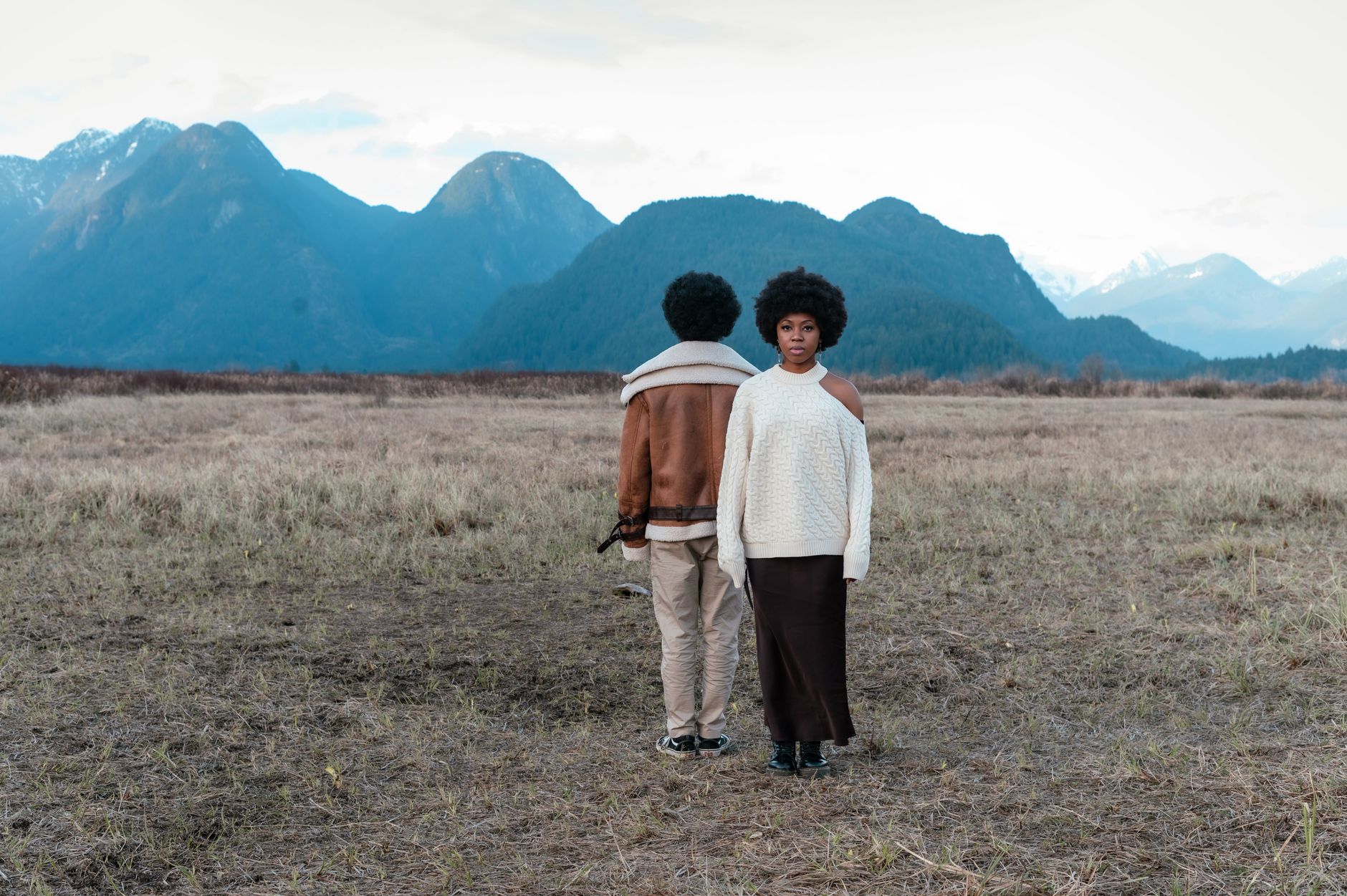
Color is being handled with unusual restraint. Where knitwear trends have pushed toward bold pattern and gradient dyeing in recent seasons – and polo-inspired palette work has been a significant part of that story – the polo neck tabard is arriving mostly in single tones. Stone, chalk, bark, deep forest, and a particular shade of warm black that reads differently from a cold jet appear most frequently. The monochromatic approach makes the structural detail visible without distraction, which is the right call for a garment where the architecture needs room to read.
Some designers are working the open sides as a deliberate styling element, using the gap to layer a contrasting turtleneck or long-sleeved base beneath, letting the second garment show at the waist. Others are closing the sides partially with oversized pins or woven ties that function like closures without fully sealing the silhouette. Both approaches acknowledge that the garment’s openness is an invitation, not a problem to be solved.
The Layering Logic
What makes the polo neck tabard genuinely useful rather than purely conceptual is the way it integrates with cold-weather dressing. The polo neck solves the one problem tabards have always had: in colder months, an open-sided garment sits over nothing warm enough to justify wearing it. The integrated high neck changes that equation entirely, making the piece functional across the same temperature range as a jumper while offering a visual profile no jumper can match.
It also travels well within a wardrobe. Over a fitted long-sleeve base, it reads as a considered daytime layer. Over a simple slip dress with the base layer removed, it pushes toward something closer to evening dressing. The same garment, worn two ways, producing genuinely different results – which is a harder thing to achieve than most knitwear manages.
Who Is Wearing It and How
Early adoption is happening among the same group that drove interest in sculptural knitwear more broadly: women in their thirties and forties who are comfortable with the idea of a garment that draws attention through structure rather than through color or branding. It is not a subtle piece. The open sides and high neck create a recognizable silhouette that reads clearly from across a room, which means the wearer has to be willing to be seen in it, not just dressed in it.
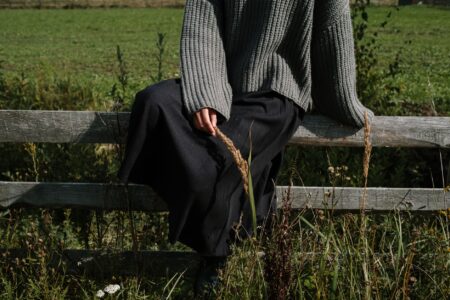
Styling choices are converging around a few clear formulas. Wide-leg trousers in wool or heavy cotton, simple pointed-toe ankle boots, minimal jewelry. The restraint everywhere else allows the garment to hold the frame of the look without competition. Bags are being worn short – a small shoulder bag or structured mini tote – to avoid breaking the vertical line that the tabard panel creates from collar to hem.
The silhouette is harder to photograph than it is to wear, which may be slowing its spread on visual platforms. In a flat lay or a front-facing still image, the open sides often read as missing rather than intentional. On a moving body, the same detail reads as architecture. That gap between how the garment looks in static content and how it actually performs is a tension the format hasn’t fully worked out yet – and it is the main reason this particular trend is still moving quietly rather than loudly.