

Equestrian sport has long fed fashion with its vocabulary of practicality and prestige, but the latest crossover is arriving from an unexpected corner of the polo field: the humble tail wrap. The structured, layered bandaging used to protect and braid polo ponies’ tails before a match is now being translated into sculptural headpieces, woven crown constructions, and avant-garde hat architecture by millinery designers looking for new formal language.
From the Stable to the Showroom
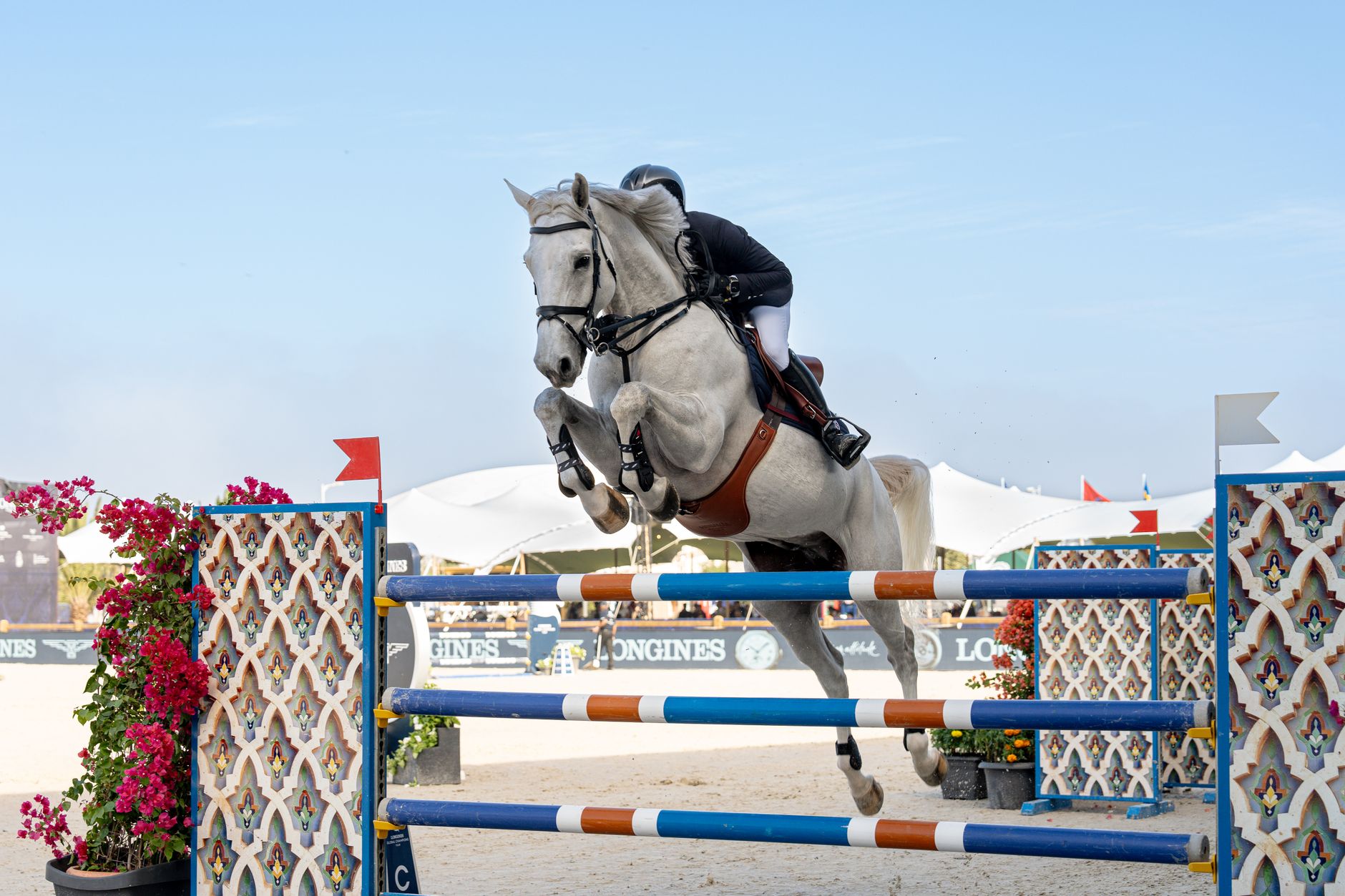
Tail wraps in competitive polo serve a specific purpose – they keep a horse’s tail bound and out of the way during play, typically applied in tight diagonal passes of bandage or ribbon that create a dense, coiled column of fabric. The visual result is architectural by nature: layered, tensioned, and geometric. For milliners working in a space where structural inspiration is always the priority, that geometry reads less like horse care and more like a construction blueprint.
A growing number of independent millinery studios are pulling directly from this reference. The coiling technique translates into hat brims wrapped in tight diagonal ribbon work. The bundled tail silhouette – tapered at the base, full at the crown – informs the proportions of new structured pillbox variations and asymmetric fascinator bases. The equestrian aesthetic carries its own built-in authority, which is part of why designers keep returning to the stable for direction.
The timing is not accidental. Avant-garde millinery has been cycling through sport-adjacent references for several seasons, working through fencing, rowing, and field athletics as sources of structural vocabulary. Polo cross-country colours have already made their way into knitwear palettes, signaling that the sport’s visual identity has broad enough reach to sustain multiple concurrent fashion translations. The tail wrap is simply the next precise point of entry.
What separates this from generic equestrian theming is specificity. Designers are not borrowing the general mood of polo – the crisp whites, the mallet silhouettes, the field graphics. They are borrowing one very particular object, studying how it functions, and building hat construction around its logic. That level of specificity is where avant-garde millinery lives: in the difference between a “horse-inspired hat” and a headpiece whose structural grammar is derived from a bandaging technique applied to a polo pony’s tail at Cowdray Park.
How the Construction Actually Works
The technique that makes tail wraps visually interesting – and technically instructive for milliners – is the diagonal wrapping pass. When a groom wraps a polo tail, they start at the top of the dock and work downward in overlapping spirals, each pass covering roughly half of the one before it. The tension across each layer is uniform, which creates a smooth, almost woven surface that holds its shape without hardware. Milliners are applying exactly this logic to hat bodies, wrapping ribbon, bias-cut silk, or narrow-woven grosgrain in the same overlapping diagonal pattern around a buckram or sinamay base.
The result is a surface texture that reads as both handcrafted and geometric – neither fully textile nor fully sculptural, but something in between. When executed in contrasting materials, the overlap lines become a decorative feature in their own right, similar to the stripe patterns that sometimes appear in polo tail braiding when teams use team-coloured wraps. Some designers are deliberately choosing two-tone ribbons or switching material mid-wrap to create stripe effects that reference actual field aesthetics.
Beyond surface treatment, the overall silhouette borrowed from the wrapped and tied tail shape introduces a tapered column form into millinery that differs from both the wide brim and the structured box hat. The wrapped tail hangs roughly vertical, full at the top and pointed at the end. Translated into a headpiece, this becomes a pendant or trailing element at the back of the crown – a feature that moves with the wearer, which adds performance quality to what might otherwise be a static hat object. Movement has always been a distinguishing factor in serious avant-garde millinery, and the tail reference delivers it structurally.
Materials matter significantly here. Traditional polo tail wraps use polo bandage, self-adhesive cohesive wraps, or cotton gauze – all of which have a matte, functional quality. Millinery translations are choosing materials that retain the texture logic while elevating the finish: duchess satin ribbon for sheen, velvet ribbon for weight and shadow, horsehair braid (fittingly) for stiffness without bulk. A small number of designers are using actual polo bandage material in their constructions, leaving the clinical aesthetic deliberately intact as a reference that rewards recognition.
The knot at the tail’s end – typically a flat bow or a simple tied finish – is also generating design interest. Milliners are treating this terminal detail as a signature element rather than a functional necessity, scaling it up into statement bows, hard-folded fabric knots, or abstracted tie shapes that sit at the base of the trailing column. The knot becomes punctuation, which is structurally honest to the source material: in polo grooming, the knot is what the entire wrapped structure depends on.
Where This Lands in the Wider Millinery Conversation
Avant-garde millinery operates in a narrow commercial window – it serves runway aesthetics, editorial shoots, occasion dressing at the formal extreme, and a small but committed collector market. Within that window, the pressure to find new structural references is constant, because the field has already absorbed so many. The polo tail wrap works as a source precisely because it has not been mined before, while still carrying enough visual clarity that the reference reads immediately to anyone familiar with the sport. There is no learning curve for the intended audience.

The question the trend leaves open is whether this specificity has a ceiling. Equestrian sport contains a finite number of discrete objects and techniques – stirrups, martingales, browbands, tail wraps – and fashion has a habit of working through a reference category until it is exhausted, then abandoning it entirely. The tail wrap is a strong entry point, but it is also a narrow one. How far a single grooming technique can stretch across a full millinery season is something designers working in this space will test fairly quickly.
Frequently Asked Questions
What is a polo pony tail wrap?
A tail wrap is a bandaging technique used in polo to bind a horse’s tail before a match, applied in overlapping diagonal spirals to create a structured, coiled column.
How are milliners using polo tail wrap techniques in hat design?
Designers are applying the diagonal wrapping method to hat bodies using ribbon and bias-cut silk over buckram bases, and borrowing the tapered column silhouette for trailing headpiece elements.