When a Sports Field Becomes a Jewelry Box
The croquet wicket – that humble metal arch driven into the grass of country house lawns and polo club grounds – has spent centuries being ignored by anyone not holding a mallet. Now, accessories designers are pulling it out of the turf and bending it into belt hardware that sits at the waist with the authority of sculpture. The silhouette is specific: a clean, arched U-shape in polished brass or blackened steel, scaled up just enough to feel architectural rather than sporting.
What makes this particular reference work where so many sport-to-fashion translations fall flat is the geometry. The wicket is already a perfect object – symmetrical, minimal, purposeful. It does not need to be explained or exaggerated to read as luxury hardware. A belt buckle asks to be looked at, and the wicket arch delivers exactly the kind of strong, graphic outline that holds attention without competing with the rest of an outfit.
The Geometry of the Game
Polo and croquet exist at the same rarefied cultural address – open fields, whites and navies, an inherited ease with expensive leisure. That shared atmosphere gives wicket-inspired hardware an immediate shorthand that designers are finding useful. It arrives pre-loaded with associations: weekend country estates, the particular green of close-cropped grass, the unhurried pace of a game played across hours. Those associations do not need to be spelled out on a label. They read through the buckle itself.
The arch shape has additional practical value as hardware. Unlike the standard rectangular or oval buckle, the wicket silhouette creates a natural central gap that functions as a prong frame, but the visual weight sits in the curved crown of the arch rather than distributing evenly around a frame. That shifts where the eye lands. The buckle becomes something closer to a pendant worn horizontally – a piece of wearable metalwork that happens to also hold a belt in place.
A growing number of accessories labels working in the sporting-heritage space are treating the wicket as a design system rather than a single accent. The arch appears not just as a center-front buckle but as repeated loop hardware along a waist band, as a clasp mechanism on shoulder straps, and as a structural detail on bag handles. Once the shape is established as the label’s signature reference, it can migrate through an entire accessories collection without ever looking like a costume.

How Metal Finish Changes the Story
The finish on wicket hardware does significant work in controlling how the reference lands. Polished gold reads as unambiguous luxury – the sporting origin becomes a knowing wink rather than a literal quotation. Aged brass pulls the reference toward antique sporting prints and the aesthetic of old trophy rooms, which suits a heritage-leaning brand but risks reading as costumey if the surrounding garment is too contemporary. Matte black or oxidized steel strips the cricket-lawn nostalgia out entirely and leaves a purely architectural form, which is the version most likely to appear in a minimalist or conceptual context.
Mixing metals within a single belt – a brass arch over a gunmetal keeper ring, for instance – has become a way to signal that the designer understands both the reference and the departure from it. It acknowledges the source while insisting on the object’s identity as fashion hardware first. The polo-adjacent aesthetic running through current knitwear palettes gives this hardware a ready wardrobe context, particularly when the belt is worn over a chunky rib or a cricket-stripe knit.
Proportion, Placement, and the Waist as Stage
The wicket buckle’s most interesting formal challenge is scale. A standard belt buckle typically sits within a proportional range calibrated to the width of the belt itself. The wicket arch, when rendered faithfully to its source shape, tends to be taller than it is wide – the opposite of most traditional buckles. Designers working with this constraint are making one of two choices: either scale the arch down until it fits conventional belt-width proportions, which preserves the silhouette but loses some of the sculptural impact, or commit to an oversized interpretation that makes the buckle the clear focal point of a look.
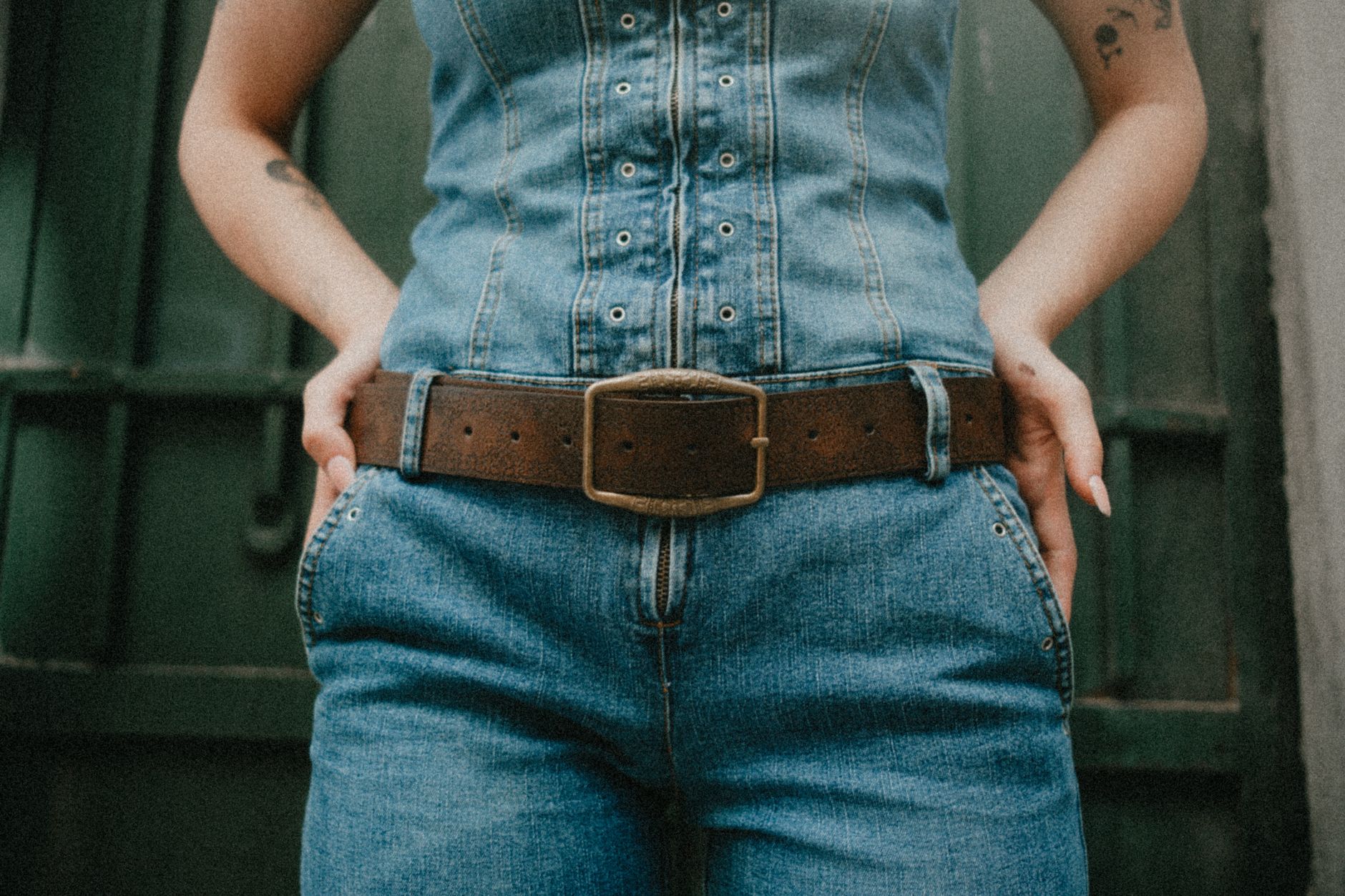
The oversized route is the more interesting one, and it has a logic beyond pure aesthetics. Wide belts worn at the natural waist are a strong current silhouette – they define the body, interrupt layering, and add structure to otherwise fluid dressing. A wicket buckle at that scale does not just fasten a belt; it plants a piece of metal sculpture at the body’s visual center. Worn over a long coat or a column dress, it functions the way a brooch used to function in the 1940s: as the single object that organizes the entire outfit around itself.
Some labels are experimenting with the wicket as negative space rather than solid form – a hollow arch in thin rod metal rather than a cast plate. This approach makes the hardware physically lighter while preserving the silhouette, which matters when a buckle is large enough to genuinely weigh on a waistband. The rod construction also lets the background fabric or garment color read through the buckle, which softens what could otherwise be an aggressively dominant accessory.
The question the trend has not yet answered is how far the wicket arch can travel from its belt origins before it loses the tension that makes it interesting. Hardware references work when there is still some legibility of the source object – enough to feel like a reference rather than an abstraction. A wicket earring or a wicket-shaped shoulder frame on a bag keeps that legibility. A wicket rendered at keychain scale or reduced to a zipper pull starts to collapse into generic arch motifs that could as easily reference a doorway or a rainbow. The detail that makes this hardware feel specific right now – its immediate connection to a precise, recognizable sporting object – is exactly the thing that overextension would erase.
Frequently Asked Questions
What is wicket-inspired belt hardware?
It refers to belt buckles and accessories hardware shaped like the U-shaped arch of a croquet wicket, scaled and finished to read as sculptural jewelry rather than sporting equipment.
What metal finishes work best for wicket buckles?
Polished gold leans into luxury, aged brass adds heritage character, and matte black or oxidized steel strips the sporting reference to leave a purely architectural form.