Polo knee guards were never meant to be pretty. Designed to absorb the impact of a mallet swing gone sideways or a collision at full gallop, they are functional objects built for a sport that most people will never play. That very insularity – the sport’s old-money mystique, its strict dress codes, its geographic remove from mainstream culture – is precisely what makes the equipment so appealing to the luxury fashion world right now.
A handful of independent labels and sportswear-adjacent brands have started introducing protective knee guards that borrow directly from the polo field’s aesthetic language: heavy-duty leather strapping, cream and tan colorways, reinforced stitching that reads as craft rather than utility. The pieces are landing not in sports retailers but in curated accessory drops alongside ceramic vases and hand-dyed linen totes. The shift in context changes everything.

Where the Aesthetic Comes From
Polo has always had a complicated relationship with fashion. The sport itself sits behind significant financial and cultural barriers, but its visual codes – the white breeches, the leather boots, the tack room palette of caramel, ivory, and hunter green – have been borrowed freely by labels for decades. What is new is the pivot from referencing polo’s clothing toward referencing its equipment.
Traditional polo knee guards are constructed from thick leather panels reinforced with additional padding, held in place with adjustable straps that wrap around the leg in a way that is architecturally interesting even at rest. The color palette tends toward natural hides and undyed materials, which reads immediately as artisanal to a contemporary accessory buyer trained to associate those qualities with price and exclusivity. There is a visual grammar here that does not require any knowledge of the sport to decode.
The knee guard also occupies an unusual category in the accessory hierarchy. It is not a bag or a shoe – two spaces already crowded with legacy competition. It sits closer to the growing market for statement leg wear and technical-meets-luxury outerwear pieces, categories that have expanded considerably as the boundaries between athletic wear and high fashion have continued to blur. A structured leather piece that wraps the knee can function as a sculptural element in an editorial context without anyone asking whether it protects against impact at 30 miles per hour.
The Drop Model Makes It Work
The limited accessory drop format is doing a lot of heavy lifting in this trend’s momentum. By releasing knee guards in quantities of 50 to 200 units through curated digital storefronts or pop-up installations, brands sidestep the question of whether a mainstream customer would ever wear one. Scarcity reframes the object as a collector’s piece rather than a wearable decision, which lowers the practical objection and raises the aspirational one. You are not buying something you will struggle to style – you are acquiring something most people will never own.
This mirrors the logic behind the broader movement of sport-specific equipment into luxury accessories editorials – objects pulled from niche athletic contexts and reframed through careful photography, minimal retail environments, and deliberate pricing that places them outside impulse territory. The knee guard fits that framework without much modification because the original object is already expensive to produce well.
How Designers Are Adapting the Form
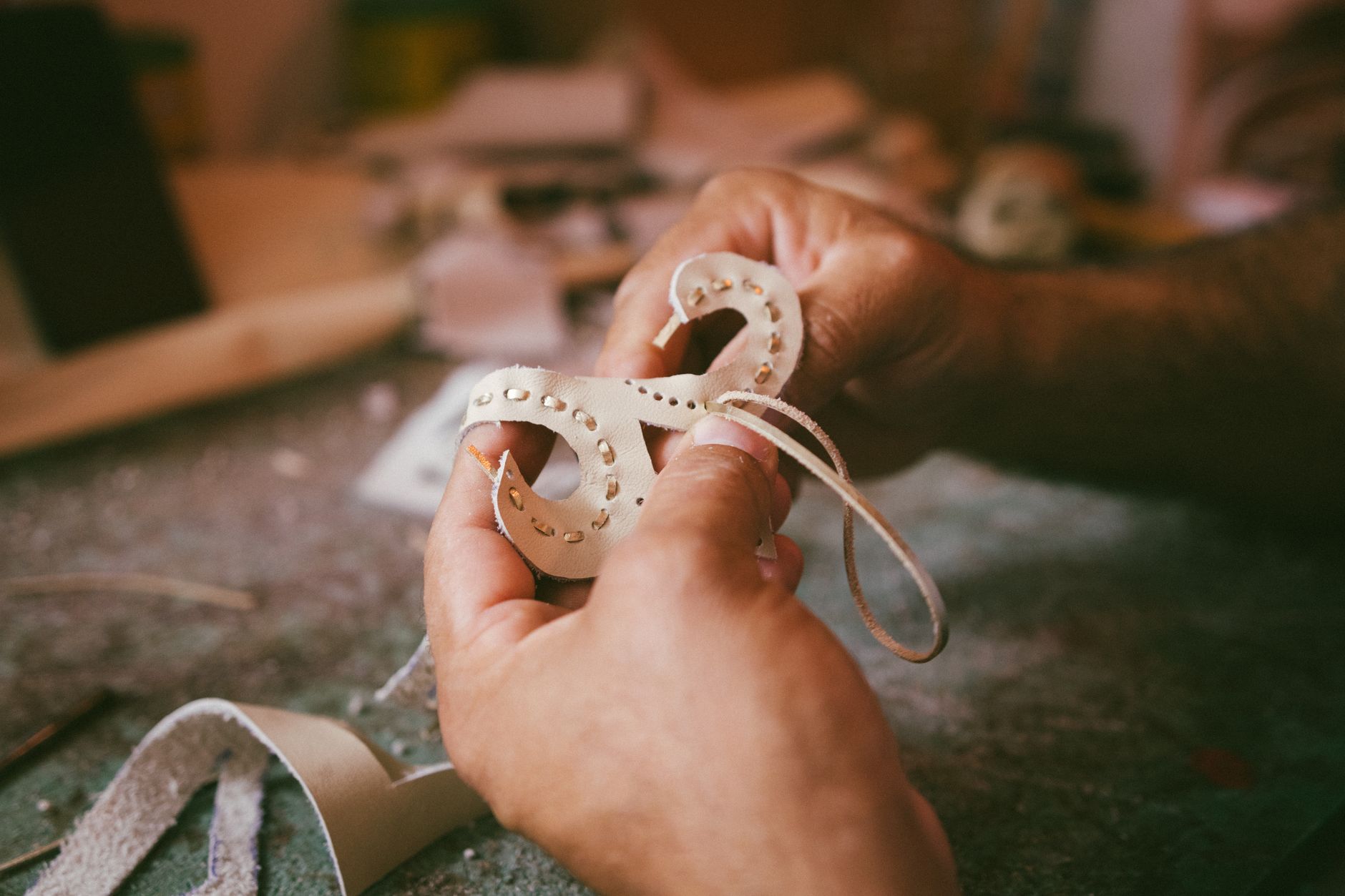
The most interesting design work happening in this space is not wholesale reinvention but selective editing. Labels are retaining the structural logic of the polo guard – the multi-panel construction, the strap system, the coverage across the kneecap and down the upper shin – while refining the materials and detailing to align with luxury standards. Vegetable-tanned leather is replacing synthetic shells. Hardware is being switched from plastic buckles to brass or blackened steel. Some versions are incorporating hand-stitched borders or edge painting in contrasting tones.
Wearability, when it is addressed at all, leans heavily on styling conventions borrowed from avant-garde fashion rather than sport. Editorial images show the guards worn over wide-leg trousers, strapped directly to bare legs under a long coat, or styled with riding boots in a way that collapses the distance between equestrian equipment and sculptural legwear. The sport context is present as a reference point but not as an instruction manual.
What makes this more than a momentary editorial quirk is the way the knee guard sits within the longer trend toward protective and structured body accessories – a category that includes everything from corset-style waist belts to padded shoulder pieces worn outside the garment. The knee guard extends that logic downward, bringing architectural interest to a part of the body that accessory design has largely ignored. Jewelry works the wrist, the neck, the ear. The knee has been left alone, which means there is actual visual territory to claim.
The price points being tested are significant. Leather polo-inspired knee guards from independent makers are appearing in the $280 to $650 range for single pieces, sometimes sold as pairs at a premium. That pricing strategy is calculated – it places the object above novelty territory while keeping it accessible to the luxury customer who shops drops regularly but is not spending at heritage-house prices. Whether that customer buys it to wear or to own is, at this stage, beside the point.

There is an unresolved tension at the center of the trend, though. The polo knee guard’s authority as an object comes directly from its function – it exists because something could go wrong at speed on a horse. Strip that context away entirely and you have a leather leg ornament that needs fashion to justify itself season after season. The labels entering this space are betting that the reference holds. It probably does – until the next sport’s equipment catches someone’s eye.
Frequently Asked Questions
Are polo knee guards actually wearable as fashion accessories?
Some independent labels are styling them over trousers or with riding boots in editorial contexts, though many buyers in the current drop market treat them as collectible objects rather than everyday wear.
How much do luxury polo-inspired knee guards cost?
Independent makers are currently pricing leather polo-inspired knee guards between roughly $280 and $650 per piece, positioning them above novelty pricing but below heritage luxury house territory.